Why Modern Mines Upgrade Their Gas Alarm System
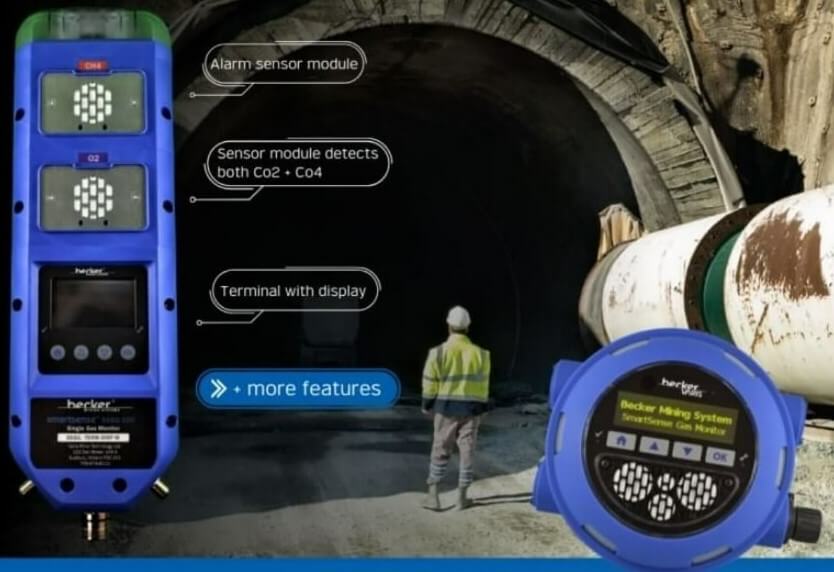
Mining operations rely on safe working conditions just as much as they depend on heavy production equipment underground. Installing a dependable gas alarm system provides continuous air monitoring and fires off immediate warnings before dangerous atmospheric changes put crews at risk. Mine operators across North America are tossing out old monitoring hardware because modern setups deliver rapid hazard detection, sharper accuracy, easier upkeep, and direct connectivity to wider mine infrastructure. Becker Wholesale Mine Supply equips underground operations with heavy-duty monitoring gear engineered specifically for unforgiving subterranean environments.
Key Takeaways
- Faster Emergency Prevention: Modern sensors catch dangerous atmospheric spikes early to stop catastrophic events before they start.
- Superior Precision: High-accuracy monitoring components drastically reduce nuisance tripping while keeping supervisors updated in real time.
- Complete Infrastructure Integration: Connected units link directly into active ventilation fans, site communications, and surface control rooms.
- Automated Compliance Logging: Digital event storage removes paperwork hassles and simplifies mandatory safety audits.
- National Supply Support: Becker Wholesale Mine Supply delivers field-tested hardware to boost underground crew protection across the country.
Why Are Mine Operators Swapping Out Their Old Air Monitors?
Mine operators upgrade their air monitoring gear because updated technology flags hazards faster, eliminates false alarms, and keeps operations fully compliant with federal safety standards. Underground conditions shift in seconds. Invisible hazards bleed out of rock seams or build up during heavy blasting, diesel hauling, and routine mucking. Without instant warnings, miners have zero time to react to invisible threats. Modern setups offer non-stop surveillance so shift bosses can pull crews out long before gas concentrations hit life-threatening levels.
Dangerous subterranean gases require constant vigilance:
- Methane ($\text{CH}_4$): Highly explosive gas trapped in coal seams and surrounding strata.
- Carbon Monoxide ($\text{CO}$): Toxic byproduct of diesel exhaust and underground combustion.
- Hydrogen Sulfide ($\text{H}_2\text{S}$): Extremely deadly gas that quickly numbs the human sense of smell.
- Oxygen Deficiency: Atmospheric drops caused by displacement or slow oxidation in closed headings.
- Nitrogen Dioxide ($\text{NO}_2$): Harsh fumes created during heavy explosives detonation.
Instant detection allows crews to clear active faces, dial up fan speeds, or shut down power feed lines until air quality settles.
What Hazards Do Aging Safety Monitoring Systems Create?
Legacy monitoring setups create severe blind spots due to sluggish sensor response, frequent drift, poor data connectivity, and high maintenance overhead. A delayed alarm signal—even by thirty seconds—can be catastrophic down in a working drift. Older hardware struggles to talk to modern digital networks, leaving surface control rooms in the dark during critical atmospheric spikes.
How Does Better Equipment Protect Underground Crews?
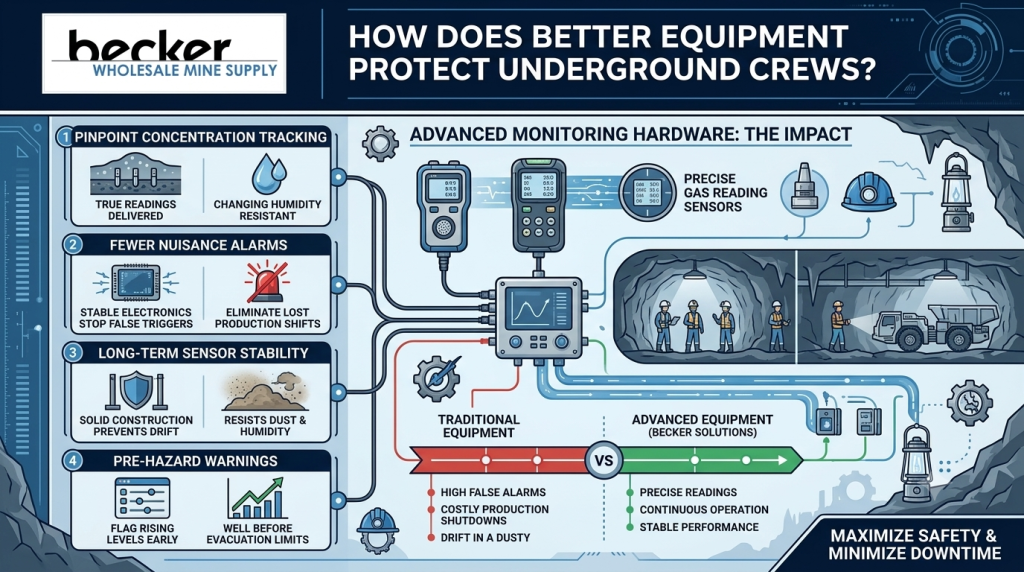
Advanced monitoring hardware protects crews by delivering precise gas readings while eliminating unnecessary, costly production shutdowns from false alarms. Updated sensors hold their zero-point calibration longer and resist drift under harsh humidity and airborne dust.
Key operational improvements include:
- Pinpoint Concentration Tracking: Advanced sensing elements deliver true readings under changing subterranean humidity.
- Fewer Nuisance Alarms: Stable electronics stop false triggers that cause lost production shifts.
- Long-Term Sensor Stability: Solid construction prevents rapid calibration drift in dusty environments.
- Pre-Hazard Warnings: Multi-threshold settings flag rising gas levels well before evacuation limits are hit.
GET IN TOUCH
In a hurry? Call us at +1-724-515-4993
What Features Make Upgraded Gas Monitoring Gear Effective?
Effective gas monitoring equipment combines loud visual and audible field warnings with automated surface alerts and automated fan control triggers. Today’s safety hardware works as an active, interconnected defensive grid across the entire layout. A modern gas alarm system integrates with fan controls, surface dashboards, and wireless tracking nodes to initiate site-wide safety protocols the second atmospheric thresholds break.
Integrated Safety Components
- High-decibel horn units and intense LED strobe arrays for active working faces.
- Real-time telemetry feeding directly into surface control rooms and SCADA networks.
- Automatic alert pushes sent directly to section foremen on mobile devices.
- Electronic event logs that auto-record every spike, fault, and routine test.
Why Is Surface Telemetry and Data Collection So Vital?
Surface telemetry gives site managers complete visual control over working sections without forcing safety teams to manually hike miles of entries. Real-time dashboards track gas trends, battery levels, and sensor wear. Automated logging removes manual record-keeping errors during inspections and flags sensor degradation early so technicians can swap components before a failure occurs. Modern digital setups expand effortlessly as new entries are developed.
Operational Safety Comparison
| Performance Factor | Older Hardware | Upgraded System |
| Response Speed | Delayed signal transmission | Sub-second real-time alert dispatch |
| System Connectivity | Standalone local buzzers | Full SCADA, fan, and tracking integration |
| Data Handling | Manual clipboards and logbooks | Automated cloud-backed event logging |
| Sensor Stability | Rapid drift requiring weekly tuning | Solid-state stability with low maintenance |
Key Underground Safety Terminology
- Lower Explosive Limit ($\text{LEL}$): The lowest percentage of a gas in air that can produce a flash or fire when exposed to an ignition source.
- Intrinsically Safe (IS): Electrical equipment built to prevent any thermal spark capable of igniting explosive atmospheric gases.
- Telemetry System: Network hardware that streams real-time sensor data from active working faces straight up to surface controllers.
- SCADA Integration: Connecting environmental field sensors into master supervisory control software for unified site management.
Practical Guidance for Underground Operators
Proactive Sensor Maintenance Saves Shifts: Don’t wait for your sensors to drift out of spec during an active shift. Setting up scheduled bumper tests and replacing sensing elements before they reach end-of-life prevents sudden nuisance trips. Integrating auto-diagnostic units keeps your system running cleanly without pulling mechanics away from primary production machinery.
Simple Steps for Upgrading Underground Safety Networks
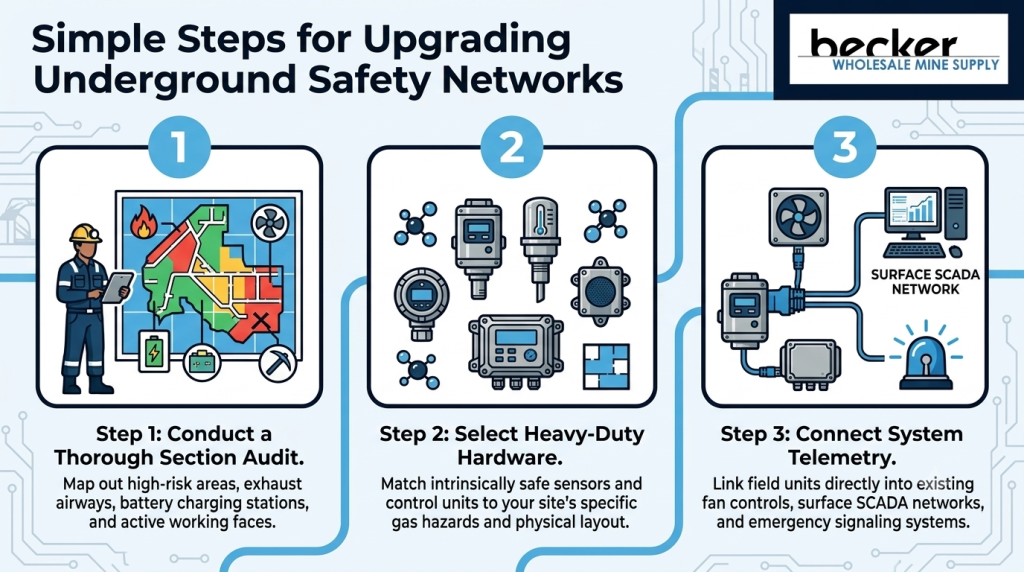
- Conduct a Thorough Section Audit: Map out high-risk areas, exhaust airways, battery charging stations, and active working faces.
- Select Heavy-Duty Hardware: Match intrinsically safe sensors and control units to your site’s specific gas hazards and physical layout.
- Connect System Telemetry: Link field units directly into existing fan controls, surface SCADA networks, and emergency signaling systems.
GET IN TOUCH
In a hurry? Call us at +1-724-515-4993
Elevate Your Site Safety Infrastructure
Upgrading your underground air monitoring technology is an investment in your people and your operation’s long-term production stability. Faster detection, real-time surface visibility, automatic data logging, and connected ventilation controls eliminate guesswork when conditions shift. Becker Wholesale Mine Supply delivers field-proven safety technologies built to handle tough subterranean environments. Contact our team to configure a reliable gas alarm system that keeps your underground entries protected and fully compliant day in and day out.
Frequently Asked Questions
Q: What does an underground gas monitor actually do?
A: An underground gas monitor tracks air quality continuously to alert miners the instant toxic or explosive gases exceed permissible exposure limits. When gas levels rise, the system sounds visual and audible field alarms, notifies surface personnel, and can trigger automated safety responses like starting auxiliary exhaust fans.
Q: Which atmospheric hazards are monitored in underground mines?
A: Mines routinely monitor methane, carbon monoxide, hydrogen sulfide, nitrogen dioxide, and oxygen levels. Tracking these specific hazards prevents gas explosions, poisoning from combustion fumes, and dangerous asphyxiation in unventilated headings.
Q: Why should a mining company replace legacy monitoring gear?
A: Older monitoring equipment suffers from slow response times, high calibration drift, poor network integration, and frequent false alarms. Upgrading to modern hardware improves worker safety, automates regulatory compliance, and links field sensors directly into surface control rooms.
Q: Can gas monitoring systems interact with ventilation fan controls?
A: Yes, modern gas detection hardware integrates directly into automated ventilation systems, emergency cutoffs, and SCADA control networks. If explosive gas spikes are detected, the system can automatically boost exhaust fan speeds, cut power to face machinery, and notify supervisors simultaneously.
Q: How does Becker Wholesale Mine Supply assist mining operations?
A: Becker Wholesale Mine Supply provides field-tested gas detection systems, underground communication gear, electrical hardware, and custom safety solutions. The team works closely with site operators across North America to deliver rugged equipment tailored to demanding underground environments.
Products That We Offer
- VHF Leaky Feeder System
- UHF Leaky Feeder System
- SMARTSENSE®FIXED MONITOR
- RNG-500VHF Leaky Feeder Cable
- UHF Low Loss Leaky Feeder Cable
- Kenwood NX-203/303 Radios
Take control of your mining communication systems today! With Becker Wholesale Mine Supply, the leading manufacturer in the USA. Contact us now and revolutionize your mining communication systems!