How Coaxial Cable Leakage Works in Underground Mines
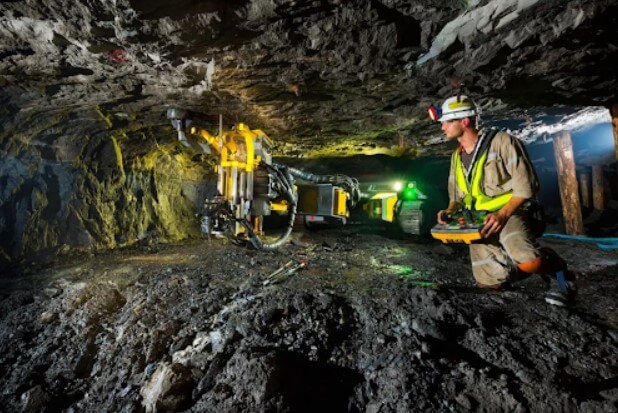
Underground mining operations face brutal communication hurdles where standard RF signals hit solid rock and die. Specialized coaxial cable leakage solves this problem by turning a heavy-duty RF cable into a continuous, radiating antenna loop. Becker Wholesale Mine Supply outfits operations with ruggedized leaky feeder setups built specifically to survive harsh underground environments.
Key Takeaways
- Radiating Cable Mechanics: Engineered coaxial cable leakage distributes RF signals evenly through outer shield slots across every foot of underground haulageway.
- Network Infrastructure Components: In-line line amplifiers, signal splitters, directional couplers, and heavy-duty connectors maintain system power through long entryways.
- Environmental Degradation Hazards: Cable damage from mobile gear, severe length constraints, poor moisture sealing, and rock falls directly affect underground signal strength.
- Mobile Comm Systems: Balanced two-way systems connect moving haul trucks, loaders, section supervisors, and handheld portables back to the surface base station.
What Is Coaxial Cable Leakage in Underground Operations?
Coaxial cable leakage refers to the controlled release of RF signals through engineered gaps in a cable’s outer shield. Unlike traditional copper coax that traps 100% of the electromagnetic signal inside to prevent signal loss, radiating cable intentionally bleeds off a precise percentage of RF power along its entire physical run.
The system works as a two-way pathway. A surface head-end unit pushes radio channels down the line. As that signal travels, controlled amounts leak out so portable radios can pick up the transmission. When a miner keys a radio mic, the signal jumps back into those same slots, traveling back up to the mine’s main line.
Why Is Coaxial Cable Essential in Deep Underground Mines?
Solid rock faces, metallic continuous miners, and tight tunnel turns completely block standard line-of-sight wireless transmissions underground. High-density ore deposits, dense granite walls, and heavy steel roof bolting absorb standard radio waves within a few feet.
Placing a continuous line of leaky feeder cable down your entries eliminates these dark spots. Instead of fighting rock density, the RF signal travels safely inside the heavy jacket until it radiates right next to your crew.
Core Operational Benefits
- Continuous Coverage: Maintains line-of-sight RF coverage around sharp rib corners, shaft drops, and section entries.
- Equipment Connectivity: Integrates haul trucks, scoops, continuous miners, and shuttle cars into a central dispatch hub.
- System Scalability: Extends deep into active headings simply by splicing in new cable sections as the face advances.
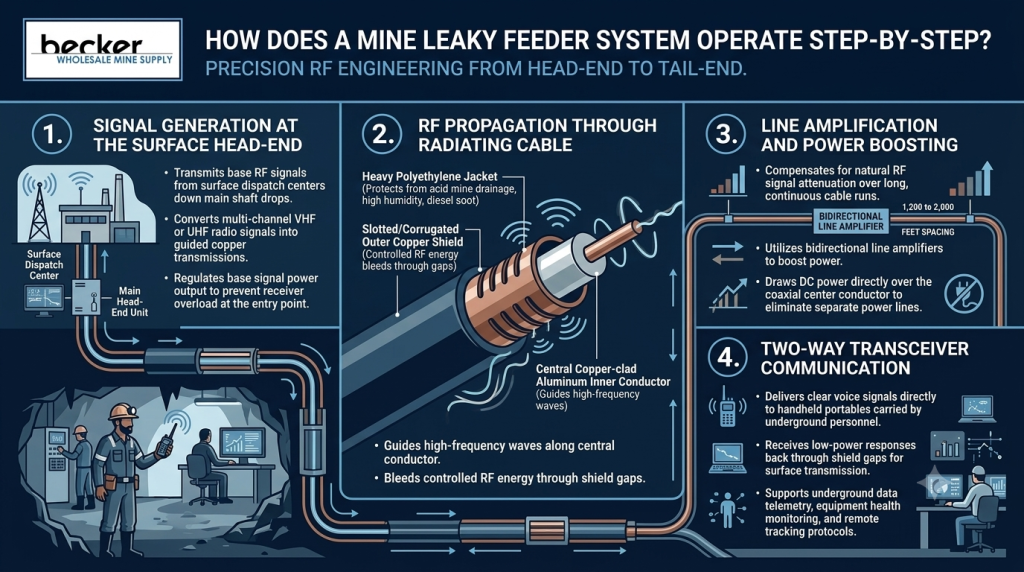
How Does a Mine Leaky Feeder System Operate Step-by-Step?
Building a dependable underground communications loop requires precise RF engineering from the main head-end unit down to the tail-end termination.
- Signal Generation at the Surface Head-End
- Transmits base RF signals from surface dispatch centers down main shaft drops.
- Converts multi-channel VHF or UHF radio signals into guided copper transmissions.
- Regulates base signal power output to prevent receiver overload at the entry point.
- RF Propagation Through Radiating Cable
- Guides high-frequency waves along a central copper-clad aluminum inner conductor.
- Bleeds controlled RF energy through slotted or corrugated outer copper shields.
- Protects inner components from acid mine drainage, high humidity, and diesel soot using a heavy polyethylene jacket.
- Line Amplification and Power Boosting
- Compensates for natural RF signal attenuation over long, continuous cable runs.
- Utilizes bidirectional line amplifiers spaced every 1,200 to 2,000 feet to boost power.
- Draws DC power directly over the coaxial center conductor to eliminate separate power lines.
- Two-Way Transceiver Communication
- Delivers clear voice signals directly to handheld portables carried by underground personnel.
- Receives low-power responses back through the shield gaps for surface transmission.
- Supports underground data telemetry, equipment health monitoring, and remote tracking protocols.
GET IN TOUCH
In a hurry? Call us at +1-724-515-4993
How Do Standard Coaxial and Leaky Feeder Cables Compare?
| Performance Metric | Standard Solid-Shield Coaxial Cable | Underground Leaky Feeder Coaxial Cable |
| Primary Design Goal | Retain 100% of RF signal inside the jacket | Radiate a controlled percentage of RF signal along the run |
| Outer Shield Type | Solid copper foil, dense braid, or smooth tube | Slotted, punched, or loosely braided outer copper shield |
| Coverage Area | Point-to-point (Antenna to Receiver only) | Continuous linear coverage along the entire cable length |
| Typical Application | Surface drop lines, cabinet jumpers, antenna leads | Mine entryways, haulageways, shafts, and rail tunnels |
| Signal Attenuation | Low signal loss over long distances | Higher intentional signal loss due to continuous leakage |
Key Terms in Mining Communications
- Line Amplifier: In-line bidirectional signal booster that balances RF loss over long cable distances.
- Slot Leakage: Engineered openings in a cable outer shield that allow RF energy to radiate in and out.
- Head-End Unit: The central surface transmitter that routes radio traffic through the mine’s leaky feeder loop.
- Directional Coupler: Hardware that splits off a fraction of RF power to feed side entries while keeping the main trunk active.
- DC Line Powering: Transmitting direct current electricity down the coaxial center conductor to power remote amplifiers without extra wiring.
Practical Setup Tips for Mine Communication Lines
Here is the part most underground mine crews learn the hard way: installing leaky feeder systems requires clean craftsmanship and constant protection.
Operator Guidance
Keep Splices Moisture-Proof and Mechanically Supported. Water entering a leaky feeder cable acts like a short-circuit for RF energy. Always use high-grade, sealed, mine-rated N-connectors and heavy heat-shrink tubing on every splice. Never hang cable directly on sharp metal rib mesh without rubber isolators, or equipment vibration will chafe the jacket and kill your signal loop.
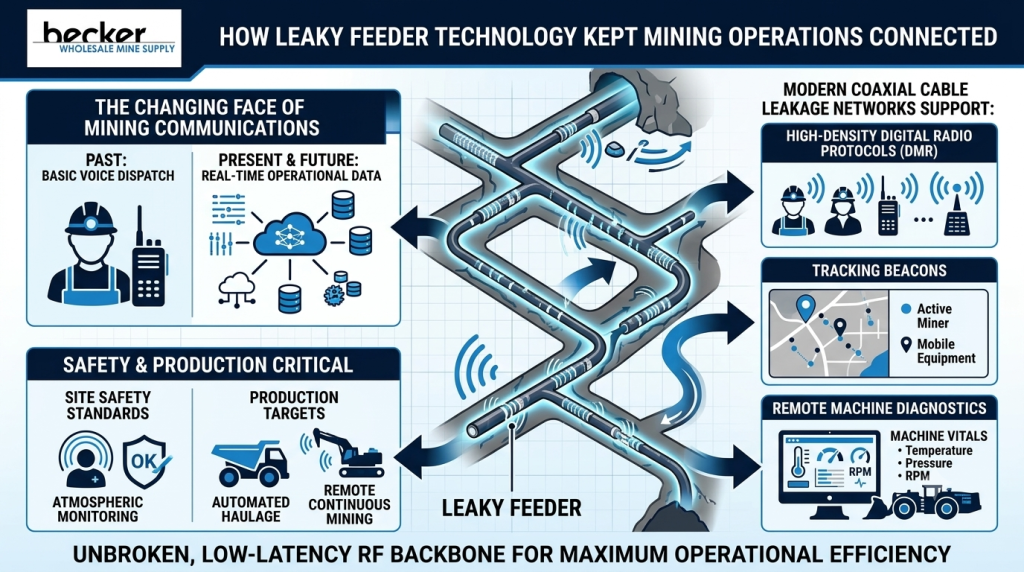
How Will Leaky Feeder Technology Keep Mining Operations Connected?
Underground communications are changing fast, moving beyond basic voice dispatch into real-time operational data tracking. Modern coaxial cable leakage networks support high-density digital radio protocols (DMR), tracking beacons, and remote machine diagnostics right alongside worker communication channels.
As automated haulage, remote continuous mining, and advanced atmospheric monitoring expand, maintaining an unbroken, low-latency RF backbone across active faces is essential for both daily production targets and site safety standards.
GET IN TOUCH
In a hurry? Call us at +1-724-515-4993
Streamline Your Underground Communications Network
Keeping your underground crews, haul lines, and section supervisors fully connected requires rugged components built for harsh mining conditions. Becker Wholesale Mine Supply delivers mine-tested leaky feeder cables, line amplifiers, splitters, and sealed connectors engineered to perform in dust, moisture, and heavy vibration. Contact our team today to audit your underground communications layout, source replacement components, or design a reliable RF backbone built for your mine.
Frequently Asked Questions
Q: What causes severe signal drop in a mine leaky feeder system?
A: Crushed cables from shuttle car impacts, water intrusion at unsealed connectors, and failing line amplifiers cause the most signal loss. Routine physical checks and RF sweep tests isolate these faults quickly.
Q: How far can leaky feeder cable run without an amplifier?
A: Most mine installations require a bidirectional line amplifier every 1,500 to 2,000 feet. The exact spacing depends on operating frequencies, cable diameter, and RF loss metrics.
Q: Can leaky feeder systems handle digital data alongside voice traffic?
A: Yes, modern leaky feeder setups handle voice channels, SCADA telemetry, asset tracking data, and slow-scan video over designated RF frequencies on the same physical line.
Q: What happens if a leaky feeder cable snaps underground?
A: A full cable break drops signal coverage past the damaged point. Installing loop-back architecture or redundant surface drops keeps the rest of the underground network operational if a break occurs.
Q: How do ground conditions alter leaky feeder radio performance?
A: Wet ore faces and high-density mineral deposits absorb radiated RF signals faster than dry limestone. Adjusting amplifier gain and cable placement off the rib compensates for these ground conditions.
Products That We Offer
- VHF Leaky Feeder System
- UHF Leaky Feeder System
- SMARTSENSE®FIXED MONITOR
- RNG-500VHF Leaky Feeder Cable
- UHF Low Loss Leaky Feeder Cable
- Kenwood NX-203/303 Radios
Take control of your mining communication systems today! With Becker Wholesale Mine Supply, the leading manufacturer in the USA. Contact us now and revolutionize your mining communication systems!