How Mining Companies Use Industrial Radio Communication
Mining operations in the United States operate under some of the most punishing physical conditions on earth. Heavy dust, constant vibration, rock face density, and subterranean shafts turn basic field coordination into a daily challenge. Relying on commercial handhelds or consumer cellular networks in an active mine leads directly to dropped calls, blind spots, and costly delays. Deploying commercial-grade industrial radio communication systems bridges the gap between active surface yards, deep underground stopes, and centralized control rooms. Becker Wholesale Mine Supply builds rugged hardware designed specifically to keep site crews safe, equipment moving, and production lines running without expensive unexpected stops.
Key Takeaways
- Elevate Mine Safety Protocols: Instant voice channels allow immediate hazard reporting, rapid emergency dispatches, and real-time site evacuations.
- Maintain Underground Operations: Continuous signal propagation through rock strata keeps miners connected to surface superintendents without signal loss.
- Minimize Equipment Downtime: Fast comms speed up maintenance dispatches, equipment checks, and shift handovers across active production sites.
- Harsh-Environment Durability: MSHA-rated hardware withstands heavy water ingress, abrasive coal dust, diesel fumes, and severe drop impacts.
- Complete USA Site Coverage: Becker Wholesale Mine Supply delivers custom comms infrastructure tailored for hard-rock and deep-seam mining applications across North America.
Why Is Continuous Voice Communication Vital in Underground Operations?
Underground operations demand real-time field communication to prevent operational bottlenecks and keep crews safe. Subterranean mines create severe physical blockages that stop standard signals. Custom radio networks cut through heavy rock structures, allowing continuous updates between tunnel crews and surface teams.
The real-world conditions inside active shafts are tough. Crews often work miles away from the main portal, cut off from traditional cell towers by thick rock layers. When unexpected roof shifts occur or a haul truck breaks down in a haulage drift, workers cannot afford to walk back to a hardline phone. Instant radio dispatches fix these issues right away:
- Speed Up Mucking Operations: Coordinate haulage truck arrivals at the loading pocket to eliminate transport delays.
- Streamline Shift Handovers: Relay shift updates directly to oncoming crews before they enter active working faces.
- Accelerate Field Inspections: Send real-time updates during ventilation checks, roof-bolting sweeps, and gas monitoring procedures.
- Dispatch Technical Support: Connect underground technicians directly with surface engineers to troubleshoot mechanical issues fast.
What Is Industrial Radio Communication and How Is It Built for the Mine Face?
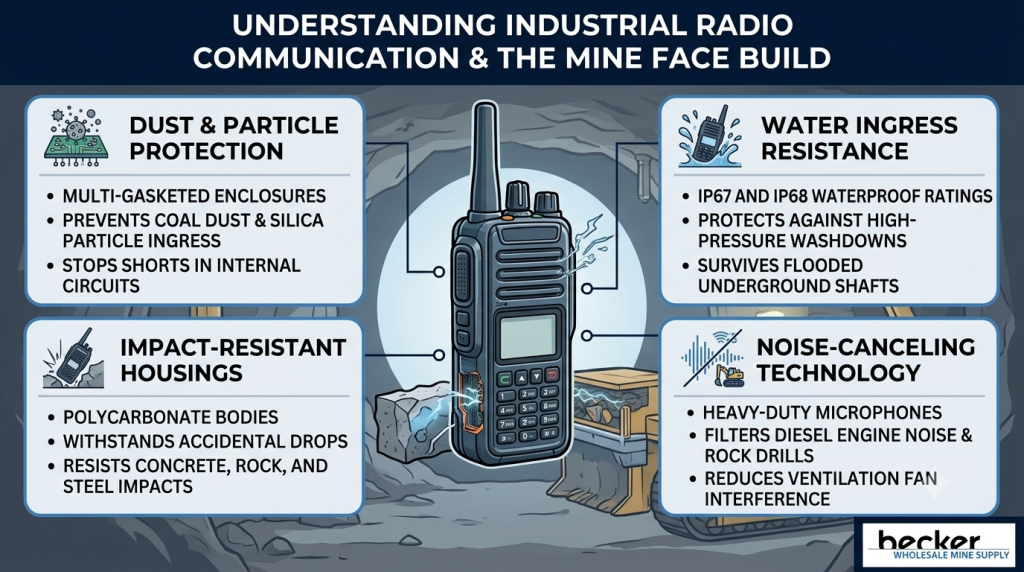
Industrial radio communication uses reinforced hardware and specialized frequencies to deliver reliable signals in extreme work sites. Built to withstand dust, severe drops, and water exposure, these units maintain reliable connections where standard commercial radios fail.
These heavy-duty systems deliver reliable performance across tough applications:
- Dust and Particle Protection: Multi-gasketed enclosures stop conductive coal dust and fine silica particles from shorting internal circuit boards.
- Water Ingress Resistance: IP67 and IP68 waterproof ratings protect units against high-pressure washdowns and flooded underground shafts.
- Impact-Resistant Housings: Polycarbonate bodies withstand accidental drops onto concrete pads, rock rubble, or steel decking.
- Noise-Canceling Technology: Heavy-duty microphones filter out loud diesel engine noise, rock drills, and large ventilation fans.
GET IN TOUCH
In a hurry? Call us at +1-724-515-4993
How Do Crews Maintain Underground Signal Coverage Across Deep Tunnels?
Underground crews maintain signal coverage using leaky feeder cables and underground repeaters that run radio signals through rock shafts. This custom cabling acts as an extended antenna system, carrying RF signals around tight corners, down mine shafts, and into deep stopes.
Here is the straightforward process for setting up mine-wide comms:
- Surface Base Station Setup: Place the primary high-power transmitter and antenna array at the main surface office or portal entrance.
- Leaky Feeder Installation: Run heavy-duty coaxial cable with precision slot cuts along the rib line of every active haulage tunnel and drift.
- In-Line Amplifier Placement: Space bi-directional line amplifiers along the cable runs to make up for signal loss over long distances.
- Subterranean Repeater Integration: Install explosion-proof repeater boxes at key tunnel intersections to extend coverage into active working faces.
How Does Instant Radio Dispatch Direct Emergency Response?
Instant radio dispatch speeds up emergency responses by sending real-time alerts across all underground and surface channels. Clear comms help safety personnel track team locations, run emergency evacuations, and coordinate rescue efforts without delay.
When an unexpected emergency occurs, seconds count. Clear comms make sure safety protocols happen right away:
Emergency Response Systems
- Instant Mass Notifications: Broadcast emergency evacuation orders across all channels with a single push-to-talk button.
- Isolated Crew Tracking: Track crew locations and check status reports during active safety events.
- Direct Mine Rescue Support: Give underground rescue teams dedicated channels to talk directly with surface command units.
Safety Monitoring Integration
- Integrated Man-Down Sensors: Send automatic distress calls to dispatch centers if a radio sits motionless or tilts past a set angle.
- Immediate Hazard Alerts: Let line workers report rock instability, gas spikes, or water leaks right as they happen.
- Isolated Worker Checks: Schedule automatic check-ins for lone technicians working in remote tunnel locations.
Comparing Infrastructure Options for Site Operations
Choosing the right equipment setup keeps your team connected while controlling long-term site costs:
| Infrastructure Option | Environmental Rating | Typical Coverage Area | Primary Operational Advantage | Ideal Mining Application |
| Leaky Feeder Coax | MSHA Underground Approved | Miles of linear tunnels and shafts | Continuous signal along entire cable run | Underground haulage drifts & shafts |
| Digital Mobile Radio (DMR) | IP67 Heavy-Duty Sealed | 5-10 mile surface line-of-sight | Dual-slot capability doubling channel capacity | Open-pit haul roads & processing plants |
| Mesh Wi-Fi Nodes | Industrial NEMA Enclosures | Focused local zone coverage | High-bandwidth video and data telemetry | Automated load-haul-dump (LHD) zones |
| Traditional Analog | Standard Weatherproof | Point-to-point short range | Legacy compatibility with simple setups | Small surface aggregate pits |
Essential Mine Site Comms Terminology
Understanding key industry specs helps you select the right hardware for your mine layout:
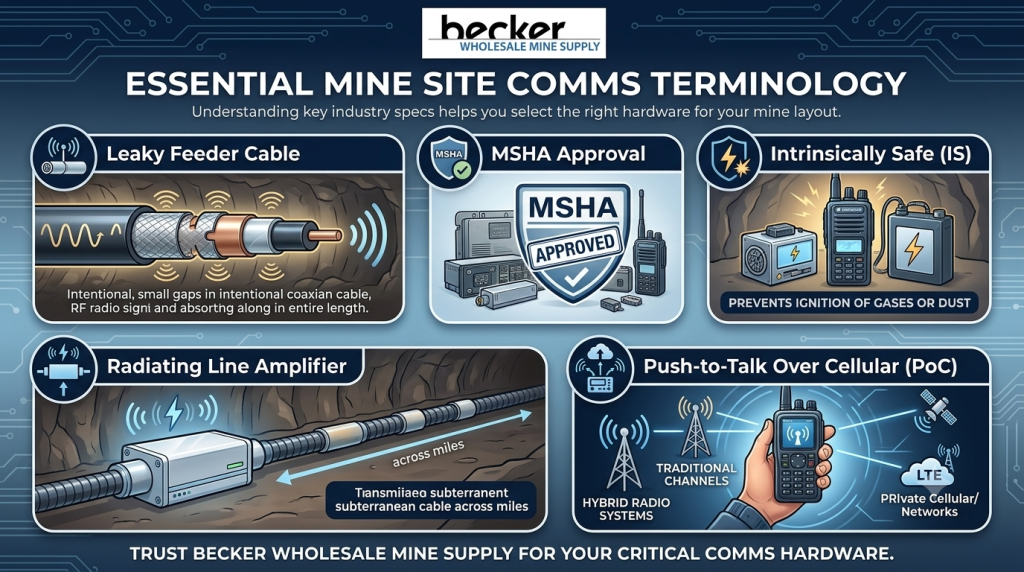
- Leaky Feeder Cable: Coaxial cable manufactured with small gaps in its outer shield, allowing RF signals to emit and absorb along its entire length.
- MSHA Approval: Certification from the Mine Safety and Health Administration confirming hardware meets explosive environment safety standards.
- Intrinsically Safe (IS): Electrical equipment built to prevent sparks or heat that could ignite hazardous mine gases or dust.
- Radiating Line Amplifier: In-line boosters designed to maintain signal power across miles of subterranean cable runs.
- Push-to-Talk Over Cellular (PoC): Hybrid radio systems that combine traditional radio channels with private LTE or satellite networks.
GET IN TOUCH
In a hurry? Call us at +1-724-515-4993
Field Guidance for High-Reliability Mine Systems
Pro Tip: Never rely on simple point-to-point radio tests on the surface to estimate underground performance. Underground rock strata act as dynamic signal attenuators. High moisture levels, dense iron-ore seams, and continuous machinery movement constantly disrupt RF signals. Always conduct comprehensive signal surveys along active ribs. Install redundant line amplifiers near primary portals to prevent complete communication blackouts when haul trucks snag leaky feeder cables during operation.
Upgrading Your Mine Operations with Becker Wholesale Mine Supply
Modern mining requires reliable hardware built for punishing environments. Becker Wholesale Mine Supply provides field-tested industrial radio communication systems built specifically for high-stress underground and surface operations across the United States. Our turnkey radio packages deliver crystal-clear voice clarity, zero dead zones, and continuous safety coverage so your crew stays connected on every shift. Call Becker Wholesale Mine Supply Today
Frequently Asked Questions
Q: What makes industrial radio communication different from standard radios?
A: Industrial radio systems feature MSHA-approved, intrinsically safe enclosures built to resist dust, water, and heavy impact. Unlike commercial units, they use leaky feeder networks and line amplifiers to maintain strong signal coverage through solid rock subterranean shafts.
Q: How does leaky feeder cable work in underground tunnels?
A: Leaky feeder cable acts as an extended antenna. Small slots in the outer shield allow radio frequency signals to radiate out and leak back in along miles of subterranean tunnels, giving field crews clear signal coverage around tight rock corners.
Q: Why are intrinsically safe radios mandatory in underground mines?
A: Intrinsically safe radios are engineered to operate at low power levels without producing electrical sparks or thermal discharge. This prevents the ignition of explosive coal dust, methane gas, or volatile fumes present in active underground stopes.
Q: How do industrial radio systems improve site productivity?
A: Instant field comms reduce operational delays by connecting underground crews directly with surface dispatchers. Line supervisors can immediately direct haulage trucks, schedule mechanical repairs, and manage shift changes without waiting for manual updates.
Q: Can Becker Wholesale Mine Supply customize radio packages for specific mine layouts?
A: Yes, Becker Wholesale Mine Supply designs custom communication networks for both surface and underground mine layouts across the United States. We supply leaky feeder systems, repeaters, handheld units, and base stations tailored to your site geology.
Products That We Offer
- VHF Leaky Feeder System
- UHF Leaky Feeder System
- SMARTSENSE®FIXED MONITOR
- RNG-500VHF Leaky Feeder Cable
- UHF Low Loss Leaky Feeder Cable
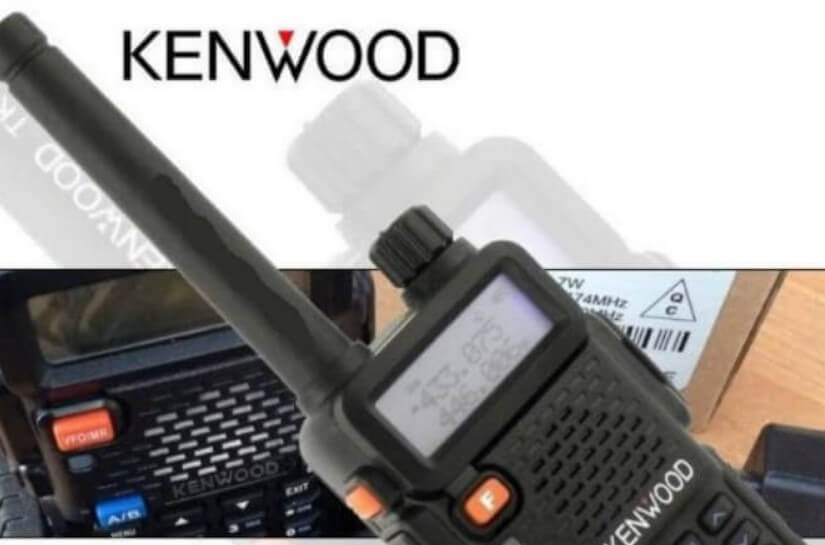
- Kenwood NX-203/303 Radios
Take control of your mining communication systems today! With Becker Wholesale Mine Supply, the leading manufacturer in the USA. Contact us now and revolutionize your mining communication systems!