Types of Mining Communication Equipment Explained
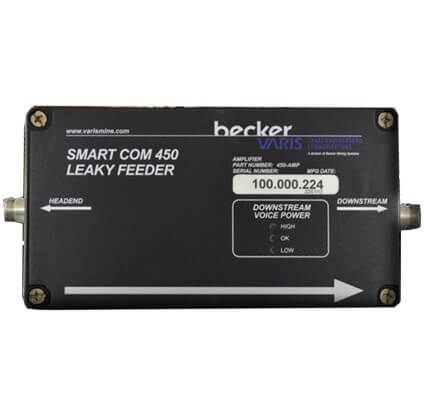
Underground operations hit heavy dead zones fast. Deploying battle-tested mining communication equipment keeps working crews safe, maintains heavy haul schedules, and prevents costly downtime in demanding shafts.
Key Takeaways
- Deploy leaky feeder systems to maintain clear radio signals through deep twisty rock turns.
- Run high-speed fiber backbones to feed real-time automated drill telemetry directly to surface controllers.
- Install two-way digital radios to give haul operators instantaneous voice contact in high-vibration cabs.
- Equip refuge chambers with battery-backed emergency phones to secure worker safety during power drops.
Why Do Underground Shafts Need Specialized Voice and Data Gear?
Underground mines create extreme dead zones, requiring purpose-built radios and cables to punch clear voice signals through dense granite walls. Low visibility, heavy machine rattle, tight stopes, and harsh dust choke standard commercial signals instantly. Equipping your crew with industrial mining communication equipment guarantees reliable field contact, tracks personnel downhole, cuts costly machine downtime, speeds emergency dispatch, and enforces strict MSHA safety compliance across every shift.
Worker Safety & Daily Operational Needs
- Safety & Tracking: Position digital RFID tracking tags on miners’ caps to locate crews instantly during unscheduled tunnel collapses.
- Dispatch Control: Route diesel loader traffic around active blast zones using instant push-to-talk digital radio channels.
- Downtime Prevention: Catch overheating conveyor bearings early by transmitting sensor data back to surface mechanics without delay.
How Do Leaky Feeder Systems Maintain Underground Radio Signals?
Leaky feeder networks use slotted coaxial cables as continuous antennas to broad-cast radio frequencies down miles of deep underground tunnels. High-grade two-way radios lock onto this steady signal blanket, bridging communication gaps where standard line-of-sight wireless fails.
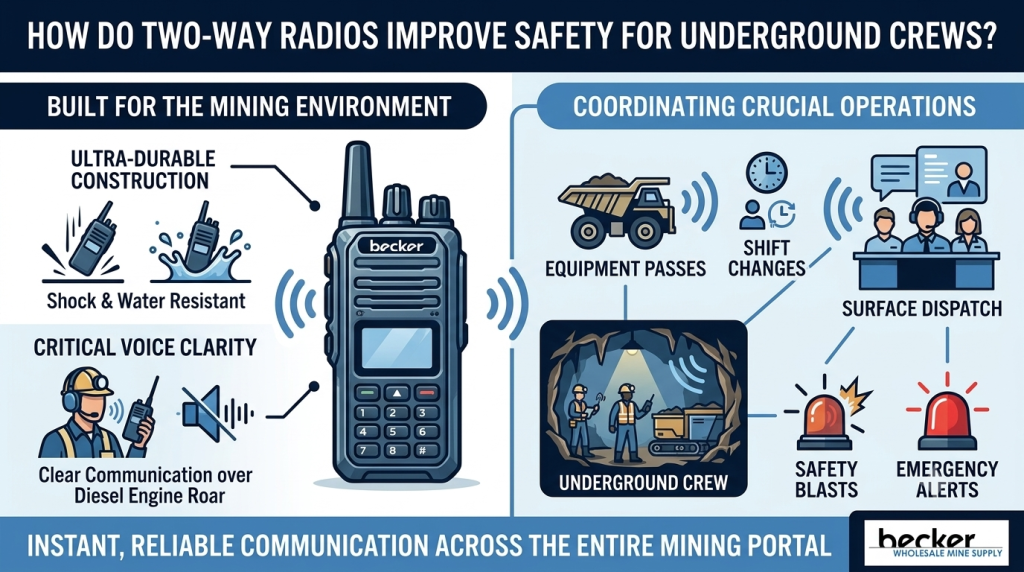
How Do Two-Way Radios Improve Safety for Underground Crews?
Heavy-duty hand-held radios give miners clear, instantaneous voice communication with surface dispatch teams despite deafening diesel engine roar. Built to survive drop shocks and deep water splashes, these radios coordinate equipment passes, manage shift changes, send safety blasts, and transmit emergency alerts instantly across the entire portal.
GET IN TOUCH
In a hurry? Call us at +1-724-515-4993
Why Is Fiber Optic Cable Essential for High-Speed Mine Data?
Fiber optic backbones transmit massive voice and telemetry data loads at light speed, handling the heavy digital bandwidth modern automated mining requires. These armored optical cables resist electromagnetic interference from huge crusher motors, powering high-definition camera feeds, automated drill controls, and continuous environmental gas monitoring without lag.
How Do Industrial Wireless Networks Drive Smart Mining Operations?
Rugged underground Wi-Fi access points create dependable wireless zones, linking mobile scanners, sensor arrays, and haul trucks directly to core monitoring networks. These flexible wireless nodes update inventory levels, track equipment locations, and deliver live diagnostics without wiring every foot of the tunnel.
- Access Nodes: Bolt sealed IP67 wireless access points directly to timber supports in primary haulage ways.
- Live Monitoring: Transmit real-time engine health data from haulage vehicles to fix small mechanical issues early.
- Remote Controls: Allow operators to control mucking machines from safe surface centers away from unsupported brows.
What Emergency Gear Keeps Miners Connected During a Power Failure?
Dedicated emergency communication systems rely on independent battery backups to keep vital voice links open during sudden main power failures. Sealed refuge chamber phones, loud alarm horns, wireless alerts, and sturdy evacuation lines help workers stay calm, get clear instructions, and verify safe roll calls during emergencies.
- Refuge Chamber Phones: Wire hardliner, battery-backed phones into sealed emergency shelters for guaranteed surface contact.
- Tunnel Alarms: Install high-decibel horns and flashing strobe lights along main escape routes to speed up evacuations.
- Uninterruptible Power: Back up central switchgear with long-life battery banks to keep emergency circuits live through outages.
How Do Personnel Tracking Systems Pinpoint Underground Crews?
Personnel tracking systems combine active RFID tags inside hardhats with tunnel sensors to display worker locations on surface control monitors. The reality on the ground is that knowing exactly who is in every stope speeds up emergency roll calls, prevents accidents around heavy machinery, and speeds up rescue responses when unexpected incidents occur.
What Are Digital Communication Platforms for Mining Operations?
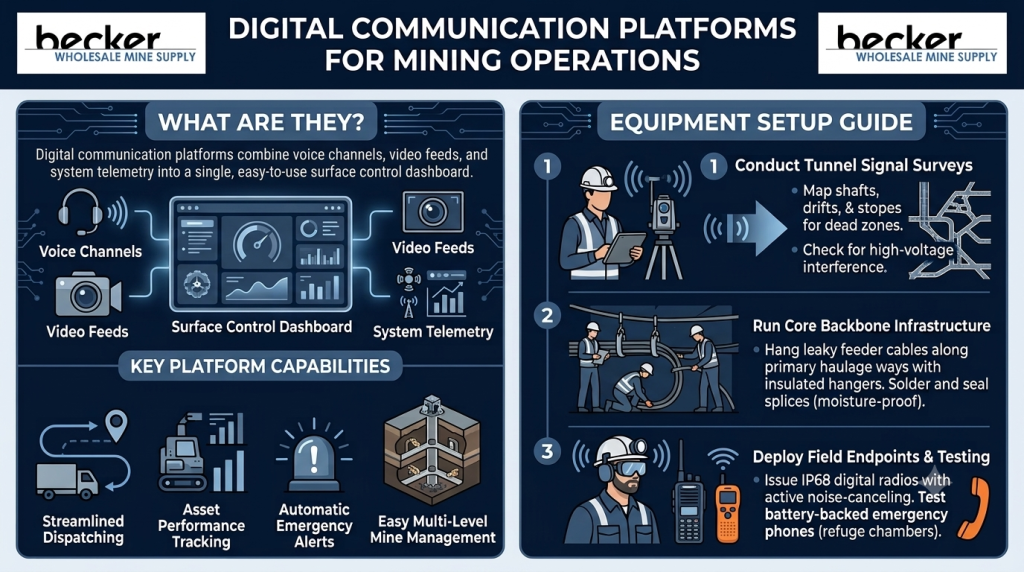
Digital communication platforms combine voice channels, video feeds, and system telemetry into a single, easy-to-use surface control dashboard. These central systems streamline dispatching, track asset performance, automatically trigger emergency alerts, and make managing complex multi-level underground mines easier.
Equipment Setup Guide
- Conduct Tunnel Signal Surveys
- Map every shaft, drift, and stope to find dead zones before running main cables.
- Check for high-voltage power lines that could cause signal interference downhole.
- Run Core Backbone Infrastructure
- Hang heavy-duty leaky feeder cables along primary haulage ways using insulated hangers.
- Solder and seal all cable splices to keep moisture out of the outer shielding.
- Deploy Field Endpoints and Testing
- Issue IP68 digital handheld radios with active noise-canceling headsets to underground workers.
- Test battery-backed emergency phones inside refuge chambers to ensure clear audio transmission.
GET IN TOUCH
In a hurry? Call us at +1-724-515-4993
Traditional vs Modern Equipment Comparison
| Equipment Feature | Traditional Systems | Modern Mining Solutions |
| Signal Carrier | Analog copper pairs and simple radios | Armored leaky feeder cables and fiber optics |
| Data Capability | Low-bandwidth voice channels only | High-speed voice, video feeds, and sensor telemetry |
| Location Tracking | Manual check-in boards at shaft tops | Real-time RFID cap lamp tracking systems |
| System Reliability | Susceptible to wire breaks and dampness | Redundant loops with heavy IP67/68 water protection |
Essential Hardware Terms
- Leaky Feeder Cable: Continuous coaxial antenna cable with small outer casing slots that let radio signals escape evenly down long tunnels.
- RFID Tracking Tag: Small electronic transponder mounted in a miner’s cap lamp to broadcast position data to tunnel readers.
- Refuge Chamber Phone: Heavy-duty, weatherproof telephone powered by internal batteries to maintain communication during main power loss.
- IP68 Ingress Rating: Strict hardware standard verifying equipment is completely dust-tight and protected against continuous water submersion.
Field Expert Advice: Avoiding Underground Signal Failures
“Here’s the part most vendors won’t tell you: standard cable ties crack under deep underground humidity and heavy rock settling within months. Always use heavy stainless-steel bands to hang leaky feeder cables along your main haulage drifts. Hanging cable loosely without tight tensioning causes signal sag, creating frustrating radio dead zones right where loader operators need clear communication most.”
Keeping Your Underground Crews Connected and Safe
Building reliable communication downhole requires tough equipment designed for dark, damp, high-vibration shafts. Installing an integrated network using leaky feeder cables, fiber optics, and real-time tracking gives your surface team full visibility while keeping underground crews safe. Becker Wholesale Mine Supply provides industrial-grade mining communication equipment that reliably performs in harsh underground conditions, keeping your operations moving safely shift after shift. Ready to eliminate dark zones downhole? Upgrade your site with heavy-duty mining communication equipment today by calling our team at Becker Wholesale Mine Supply.
Frequently Asked Questions
Q: What is the main purpose of underground mining communication equipment?
A: It provides reliable voice, data, and emergency links between surface managers and underground crews. This rugged gear coordinates daily work, tracks equipment locations, monitors environmental safety, and speeds up emergency responses downhole.
Q: How does a leaky feeder cable system work underground?
A: Leaky feeder cables act as long, continuous antennas with small gaps in their shielding. These gaps allow radio signals to leak in and out evenly, giving workers clear two-way radio coverage throughout winding tunnels.
Q: Can underground communication systems handle automated machinery data?
A: Yes, modern networks built on fiber optics and industrial Wi-Fi handle high-speed data transmission easily. They carry live video, engine diagnostics, and remote-control commands needed to run automated loaders and drills safely.
Q: How do personnel tracking systems locate workers in a mine?
A: Active RFID tags built into cap lamps send signals to receivers mounted along tunnel walls. The system processes these signals to display real-time worker locations on surface safety monitors.
Q: What factors should you consider when selecting mining communication gear?
A: Look at total tunnel length, atmospheric dampness, dusty conditions, current safety regulations, and equipment durability. Choose gear rated at IP67 or IP68 with built-in battery backups to ensure long-term reliability.
Products That We Offer
- VHF Leaky Feeder System
- UHF Leaky Feeder System
- SMARTSENSE®FIXED MONITOR
- RNG-500VHF Leaky Feeder Cable
- UHF Low Loss Leaky Feeder Cable
- Kenwood NX-203/303 Radios
Take control of your mining communication systems today! With Becker Wholesale Mine Supply, the leading manufacturer in the USA. Contact us now and revolutionize your mining communication systems!