Why Underground Mine Communication Systems Matter
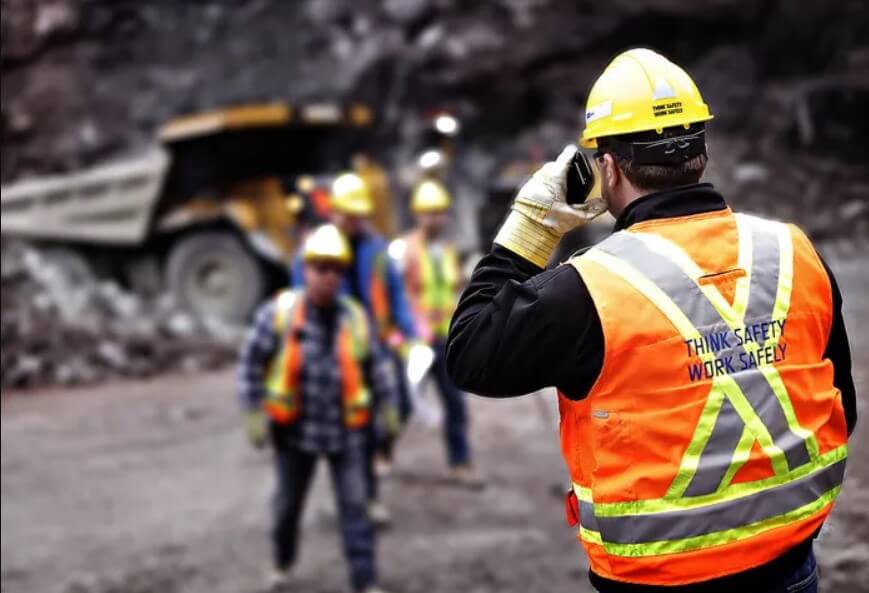
Mines operate in some of the most brutal environments on earth, and clear audio transmission is often the only thing standing between a smooth shift and a catastrophic structural event. When you are deep in a shaft, traditional radio signals die against heavy rock faces, meaning specialized underground mine communication systems are the only viable lifeline for crews, dispatchers, and emergency rescue squads. Becker Wholesale Mine Supply delivers heavy-duty communication rigs designed to keep miners interconnected, slash unnecessary dispatch delays, and ensure every team stays completely accounted for when a critical incident strikes.
Key Takeaways
- Constant Connectivity Saves Lives: Heavy-duty communications stop dangerous signal dead zones from isolating extraction crews.
- Rapid Dispatch Timing: Modernized networking equipment slices minutes off emergency rescue response times when every second matters.
- Downtime Minimization: True real-time operational diagnostics keep machinery humming and production lines moving efficiently.
- Rugged Infrastructure Rules: Mining-grade hardware survives severe moisture, extreme dust loads, and continuous blasting vibrations.
- National Deployment Reach: Becker Wholesale Mine Supply ships field-tested telecom products designed for harsh US mine sites.
What Are Underground Mine Communication Systems?
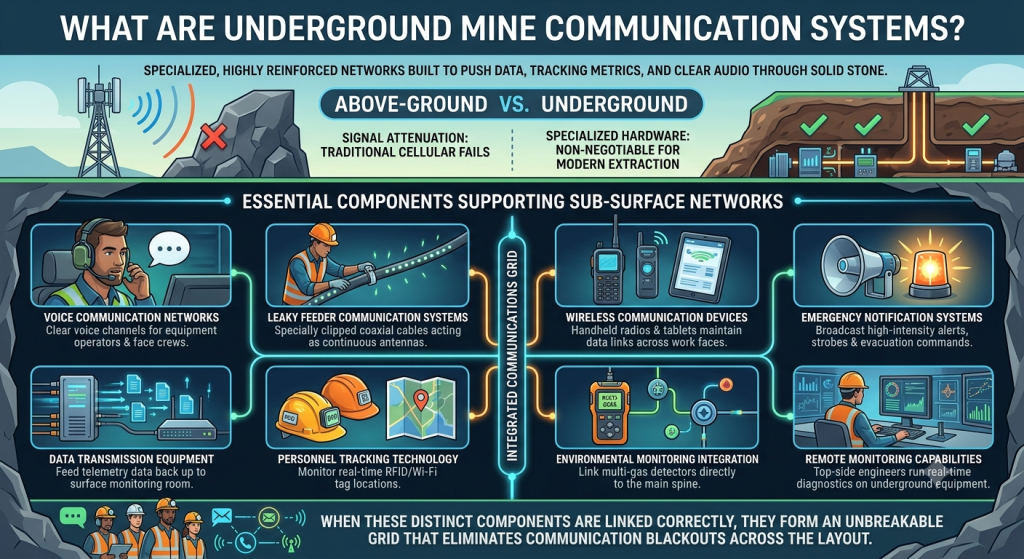
Underground mine communication systems are specialized, highly reinforced networks built to push data, tracking metrics, and clear audio feeds through thousands of feet of solid stone. Traditional above-ground cellular arrays and basic consumer walkie-talkies fail instantly down a shaft due to signal attenuation. These mining-specific systems rely on a mix of hardened distributed antenna layouts, heavy coaxial lines, and intrinsically safe transceivers.
The reality on the ground is that an unreinforced radio signal cannot turn tight corners or penetrate deep rock seams. That is exactly why specialized hardware is non-negotiable for modern extraction operations.
Essential Components Supporting Sub-Surface Networks
- Voice Communication Networks: Deliver clear, crisp voice channels for equipment operators and face crews.
- Leaky Feeder Communication Systems: Use specially clipped coaxial cables acting as continuous antennas down the entryways.
- Wireless Communication Devices: Allow handheld radios and mobile tablets to maintain data links across active work faces.
- Emergency Notification Systems: Broadcast high-intensity alerts, visual strobes, and evacuation commands instantly.
- Data Transmission Equipment: Feed telemetry data back up to the surface monitoring room without dropped packets.
- Personnel Tracking Technology: Monitor real-time RFID or Wi-Fi tag locations to know precisely where miners are working.
- Environmental Monitoring Integration: Link multi-gas detectors directly to the main communications spine.
- Remote Monitoring Capabilities: Allow top-side engineers to run real-time diagnostics on deep underground equipment.
When these distinct components are linked correctly, they form an unbreakable grid that eliminates communication blackouts across the entire layout.
GET IN TOUCH
In a hurry? Call us at +1-724-515-4993
Why Is Reliable Communication Essential Underground?
Every daily task below the surface depends heavily on how fast information travels from the active face back to the main portal. From coordinating daily haulage schedules to managing a sudden roof collapse, stable connectivity ensures that supervisors can make split-second operational decisions based on hard ground truth.
Here is the part most contractors won’t tell you: standard communication gaps do more than slow down production; they quietly introduce massive safety liabilities that put your entire crew at risk.
How Do Better Comms Protect Your Crew?
Reliable communication networks keep miners continuously connected to surface dispatchers, allowing immediate hazard alerts before minor issues escalate into major underground accidents. Working around heavy continuous miners, high-voltage lines, and shifting ribs requires total situational awareness. If a haulage truck loses brake pressure on a steep ramp, an immediate radio alert prevents a catastrophic multi-vehicle collision down the haul road.
Furthermore, dependable network infrastructure allows your field crews to take immediate action:
- Report Unsafe Conditions Instantly: Call in loose rib observations directly to the bolting crew before an injury occurs.
- Request Emergency Medical Support: Dispatch first aid teams with precise location coordinates without sending a runner.
- Receive Immediate Evacuation Alerts: Get instant notification if gas levels spike or a ventilation fan trips out above.
- Verify Daily Work Assignments: Confirm specific engineering instructions directly with the shift boss without traveling back to the shaft bottom.
- Stay Monitored by Surface Teams: Maintain constant contact so top-side management knows the exact status of deep-shaft operations.
When every miner has immediate access to a functional radio link, your standard operating safety protocols actually work the way they were engineered to.
Can Modern Telecom Infrastructure Speed Up Rescue Efforts?
Modern underground mine communication systems dramatically compress emergency dispatch timelines by providing rescue squads with instant, uninterrupted data streams during a critical site incident. When an unexpected ventilation failure or roof fall cuts off a section of the mine, every minute spent searching blind increases total crew exposure. Hardened telecom systems allow emergency commanders to pinpoint exactly where workers are trapped and direct rescue teams along the safest intake airways.
During high-stress events, reliable networks give rescue teams the upper hand:
- Pinpoint Stranded Miners: Identify exact personnel coordinates through active tracking networks to avoid searching abandoned workings.
- Coordinate Rescue Operations: Direct specialized mine rescue teams from the surface command center using reliable, multi-channel audio feeds.
- Monitor Changing Gas Levels: Receive real-time atmospheric data from the incident zone to ensure rescue crews do not walk into an explosive environment.
- Guide Evacuating Crews Safely: Broadcast alternative escape route instructions to miners if primary lifelines are blocked by smoke.
- Maintain Incident Command Channels: Keep clear lines open between underground captains and surface medical personnel throughout the operation.
The ability to maintain an uninterrupted voice stream during a crisis can completely alter the outcome of an emergency rescue attempt.
What Is the Impact of Communication on Daily Extraction Tasks?
Robust communication networks drive consistent daily production by keeping face crews, haulage operators, and surface processing plants perfectly synchronized through every shift change. A supervisor sitting in a surface office cannot manage a deep-shaft operation effectively if they are relying on outdated information. Real-time updates allow management to shift crews dynamically as tracking metrics change.
By leveraging high-performance communication lines, daily operations run significantly tighter:
- Update Production Orders Dynamically: Issue new cutting instructions directly to the continuous miner operator based on real-time coal quality tests.
- Log Completed Maintenance Tasks: Inform the main office the moment a conveyor belt splice is completed to resume immediate production.
- Alert Field Mechanics Fast: Call for an underground mechanic immediately when a shuttle car hydraulic hose blows out.
- Direct Incoming Material Deliveries: Coordinate the delivery of roof bolts and screen wire directly to the active section without logistics bottlenecks.
- Track Hourly Tonnage Metrics: Report conveyor belt scale data up to management to monitor daily shift performance against target metrics.
Better communication channels remove the daily guesswork, keeping your crews focused on moving material safely and consistently.
How Do Stronger Networks Improve Heavy Machinery Coordination?
Specialized communication networks prevent traffic bottlenecks and haulage delays by keeping continuous miners, shuttle cars, and roof bolters in constant alignment. An underground mine is a fast-moving puzzle of massive diesel and electric machinery working within narrow entries. If a haul truck breaks down on a single-lane travel way, oncoming drivers need to know about it before they nose into a dead-end turn.
Using robust underground mine communication systems, machinery operators optimize field workflows:
- Prevent Travelway Traffic Congestion: Coordinate underground haul truck movements on narrow ramps to eliminate backing accidents.
- Signal Equipment Passages Safely: Alert nearby utility tractor drivers before backing a massive loader out of a crosscut.
- Eliminate Machine Idling Hours: Call for the next available shuttle car the moment the continuous miner starts loading out material.
- Optimize Section Material Staging: Schedule haulage movements precisely so roof bolting machines never run out of supplies.
- Cut Down Tracking Delays: Identify exactly which haul truck is running behind schedule to adjust section loading priorities.
- Bridge Operator-to-Supervisor Gaps: Allow machine operators to report sudden engine faults directly to maintenance before a total component failure occurs.
Tightening up your equipment coordination by even a few percentage points results in massive volume increases over the course of a fiscal year.
How Does Active Personnel Tracking Protect Your Total Workforce?
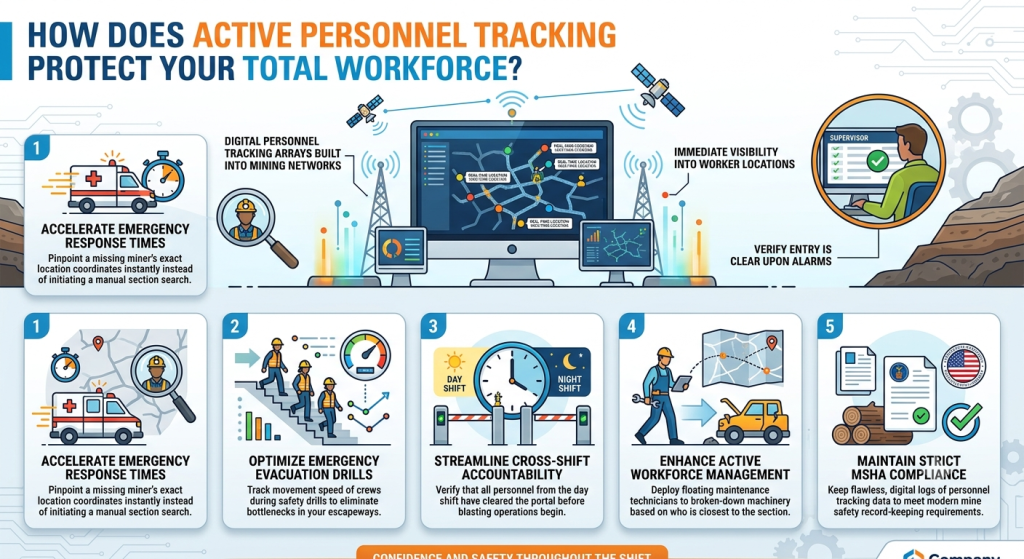
Digital personnel tracking arrays built into mining networks offer immediate visibility into worker locations, streamlining shift handovers and optimizing accountability protocols. Knowing exactly who is underground—and precisely where they are standing—is a core tenet of modern regulatory safety compliance. If an alarm sounds, supervisors do not have to guess if an entry is clear; they can verify it on a monitor.
This deep operational tracking delivers clear logistical benefits:
- Accelerate Emergency Response Times: Pinpoint a missing miner’s exact location coordinates instantly instead of initiating a manual section search.
- Optimize Emergency Evacuation Drills: Track the movement speed of crews during safety drills to eliminate bottlenecks in your escapeways.
- Streamline Cross-Shift Accountability: Verify that all personnel from the day shift have cleared the portal before blasting operations begin.
- Enhance Active Workforce Management: Deploy floating maintenance technicians to broken-down machinery based on who is closest to the section.
- Maintain Strict MSHA Compliance: Keep flawless, digital logs of personnel tracking data to meet modern mine safety record-keeping requirements.
This extra layer of tracking gives operators complete confidence that their crews are safe and accounted for throughout the shift.
GET IN TOUCH
In a hurry? Call us at +1-724-515-4993
Direct Equipment Evaluation: Modern Infrastructure vs. Outdated Systems
| Network Metric & Operational Capability | Legacy Copper Telephone Lines (Page Phones) | Modern Underground Mine Communication Systems |
| Voice Audio Clarity & Signal Stability | Low clarity; highly susceptible to line hum, wire corrosion, and moisture shorts. | High-fidelity digital audio; clean signal processing across long distances. |
| Real-Time Data Routing Capacity | Zero data capability; strictly limited to analog voice transmissions. | Massive bandwidth; easily supports live machinery telemetry and sensor feeds. |
| Worker Tracking Integration | Impossible; requires manual check-in boards at the shaft bottom. | Fully automated; streams live worker locations onto surface digital maps. |
| Hardware Resilience in Harsh Conditions | Exposed wires break easily during roof falls or heavy equipment bumps. | Reinforced enclosures and heavy coaxial cabling withstand severe impacts. |
| Emergency Power Redundancy | Fails instantly if the primary physical copper line is severed. | Battery-backed nodes and redundant paths maintain links during power cuts. |
Core Industry Terminology and Network Grounding
- Leaky Feeder Communication Systems: A specialized radio network utilizing a coaxial cable with sections of its outer shield stripped back to allow radio signals to emit along its entire length.
- Intrinsically Safe (IS) Rated: Equipment engineered with circuitry that cannot produce sufficient electrical or thermal energy to ignite methane gas or coal dust.
- Signal Attenuation: The structural loss of radio wave intensity as it passes through physical barriers like solid rock walls or heavy steel framing.
- RFID Personnel Tagging: Active or passive radio frequency identification systems used to track the real-time movement of miners through specific portals and entryways.
- Atmospheric Sensor Integration: The technical linking of underground carbon monoxide and methane detectors directly to the main digital communication network for automated alerting.
Homeowner-Focused Field Insights: Realities From the Extraction Face
Field Insight on Moisture Control: “Here’s the part most suppliers won’t tell you about deploying leaky feeder lines down a wet shaft: if your crew doesn’t pack the inline amplifier connections with high-grade silicone grease before sealing the heat-shrink tubing, the localized 4 p.m. condensation cycles will rot the copper core within a single season. Always mount your line splitters completely clear of active rib water drips, or you’ll spend half your weekend tracking down random signal drops instead of moving material.”
Putting Your Underground Communication Strategy into Motion
If you are dealing with constant radio dead zones or unreliable tracking data down your shafts, it is time to overhaul your infrastructure with field-proven hardware that stands up to heavy daily abuse. Becker Wholesale Mine Supply engineers elite, high-performance communication configurations built specifically for the most punishing mining conditions in America.
- Schedule a Site Infrastructure Review: Connect with our technical team to map your existing underground layout and identify dangerous signal dead-zones.
- Select Your Hardened System Components: Choose from our inventory of intrinsically safe leaky feeder lines, rugged transceivers, and tracking arrays.
- Deploy Your Custom Network Configuration: Install our field-tested hardware across your entries to secure clear audio feeds and real-time data tracking.
Call Becker Wholesale Mine Supply today to speak with an experienced specialist about upgrading your underground mine communication systems.
Frequently Asked Questions
Q: What are underground mine communication systems?
A: They are highly specialized, reinforced communication networks engineered to route clear voice signals and live telemetry through deep rock layers where standard commercial radios and cell phones fail completely.
Q: Why are communication systems important in underground mining?
A: They protect working crews from isolation, slash emergency response timelines, minimize mechanical downtime, and ensure operators can coordinate heavy machinery movements safely without facing costly structural delays.
Q: What types of communication technologies are used in underground mines?
A: Industrial operations rely on a combination of leaky feeder networks, intrinsically safe hand-held radios, fiber-optic backbones, digital personnel tracking nodes, and automated atmospheric monitoring systems.
Q: Can underground communication systems improve productivity?
A: Yes. Providing clear communication channels allows supervisors to update production orders instantly, speeds up mechanical repairs by streaming fault codes to the shop, and prevents haulage bottlenecks in narrow tunnels.
Q: Why choose Becker Wholesale Mine Supply for mining communication solutions?
A: We offer decades of direct mining industry experience, stock high-quality, rugged telecom hardware, and provide deep technical guidance to ensure operations throughout the United States keep their crews safely interconnected every shift.
Products That We Offer
- VHF Leaky Feeder System
- UHF Leaky Feeder System
- SMARTSENSE®FIXED MONITOR
- RNG-500VHF Leaky Feeder Cable
- UHF Low Loss Leaky Feeder Cable
- Kenwood NX-203/303 Radios
Take control of your mining communication systems today! With Becker Wholesale Mine Supply, the leading manufacturer in the USA. Contact us now and revolutionize your mining communication systems!