What Makes Radios for Miners Different From Standard Radios?
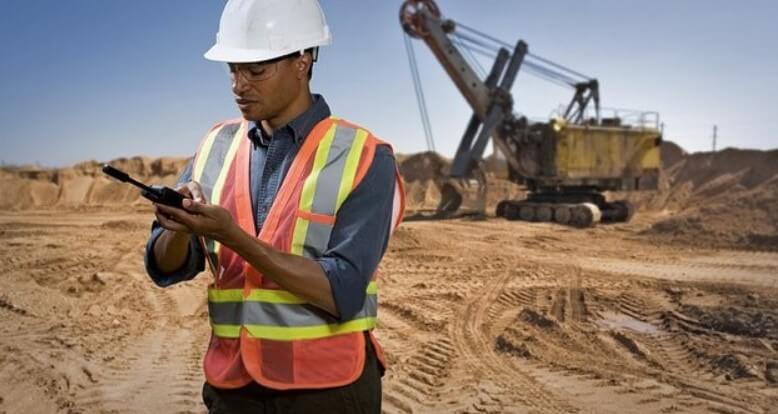
Radios for miners must fit the mine’s communication network, working conditions, and applicable safety requirements. A durable handset matters, but underground coverage and a dependable connection to the surface depend on the system around it.
At Becker Wholesale Mine Supply, our mining communication offerings include handheld radios and VHF and UHF systems. Here is what to consider when comparing mining radios with general-purpose two-way radios.
Key Takeaways
- Underground coverage depends on mine layout and communication infrastructure.
- A rugged housing does not establish approval for a hazardous atmosphere.
- Evaluate the exact radio, battery, accessories, and network configuration.
- Test voice clarity and usability under actual working conditions.
- Assess emergency communication separately from everyday performance.
Radios for Miners vs Standard Radios
“Standard radio” can mean anything from a recreational walkie-talkie to a professional industrial handset. Some industrial radios may suit a mining application. The decision depends on their documented capabilities and intended use.
| Consideration | General-purpose radio selection | Mining radio selection |
| Coverage | Range across the intended workplace | Verified communication along underground work and travel routes |
| Safety | Suitability for ordinary operating conditions | Applicable mine approvals and configuration restrictions |
| Usability | Convenient controls and adequate audio | Operation with gloves, hearing protection, and working noise |
| Compatibility | Communication within a local radio fleet | Integration with the mine’s infrastructure and dispatch arrangements |
| Resilience | Handset battery performance | Handset power plus availability of the supporting network |
Use these as purchasing criteria, not a claim that every product sold as a mining radio has every capability.
Why Underground Coverage Needs More Than a Powerful Handset
Underground radio signals face conditions that open-air range claims do not represent. Tunnel geometry, corners, and obstructions affect whether a worker can reach another radio or the network.
A leaky feeder system uses a specially designed cable that receives and radiates radio signals along its route. Amplifiers support the signal along the cable, allowing compatible handheld radios within coverage to communicate through the system.
This makes coverage planning a practical buying issue. For example, if a crew moves into a new heading, ask whether the existing infrastructure serves that area before ordering more handsets. A radio purchase alone may not address the gap.
We recommend evaluating coverage where people actually work and travel, including transitions between areas. Ask the supplier to explain how coverage will be checked as the mine develops.
Hazardous Atmosphere Approval Is Different From Durability
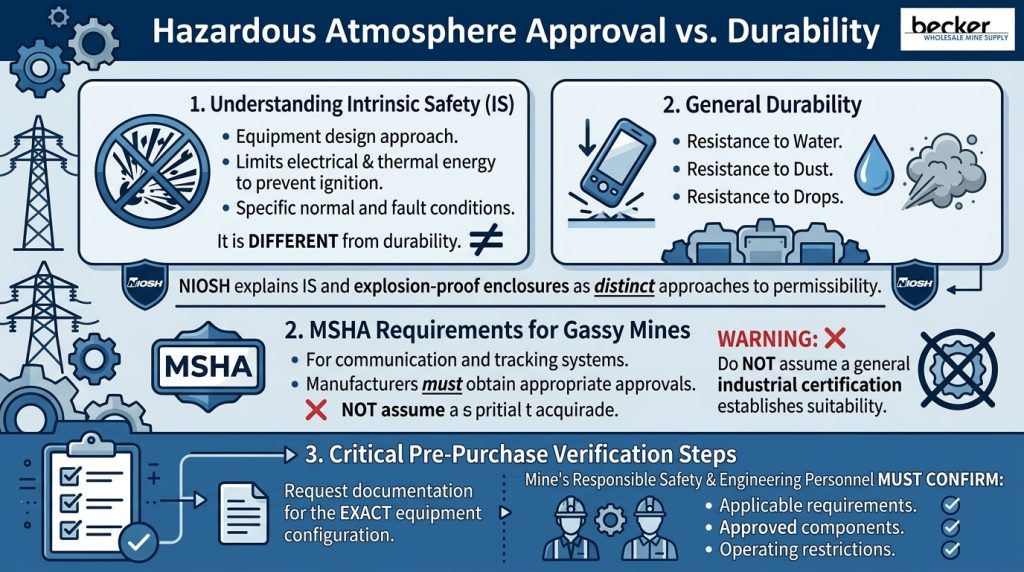
Intrinsic safety is an equipment design approach that limits electrical and thermal energy capable of causing ignition under specified normal and fault conditions. It is different from resistance to water, dust, or drops. NIOSH explains intrinsic safety and explosion-proof enclosures as distinct approaches to mine equipment permissibility.
MSHA states that manufacturers must obtain appropriate approvals for communication and tracking systems used in gassy underground mines. Do not assume a general industrial certification establishes suitability for a particular U.S. mine.
Before purchasing, request documentation for the exact equipment configuration. Have the mine’s responsible safety and engineering personnel confirm the applicable requirements, approved components, and operating restrictions.
GET IN TOUCH
In a hurry? Call us at +1-724-515-4993
Clear Audio and Usable Controls Deserve a Field Trial
A radio can establish a connection while still being difficult to use during a shift. Include the people who will carry it in the evaluation.
Can workers operate the push-to-talk button with their usual gloves? Can they distinguish messages while wearing required hearing protection? Does the carrying arrangement interfere with other equipment?
We recommend testing a candidate radio with the intended microphone or headset in representative working conditions. Ask workers to repeat a short instruction accurately rather than judging the unit only by speaker loudness.
For durability, compare documented dust, water, impact, and temperature performance with the actual exposure. Avoid treating “heavy duty” as a substitute for specifications.
Compatibility Comes Before Extra Features
A radio must work with the communication system already installed or planned. NIOSH describes both leaky feeder networks and node-based systems; their infrastructure and connection methods differ.
Ask the supplier to confirm compatibility in writing, including the frequency band, channel configuration, operating mode, and required interfaces. If emergency alerts or tracking integration are part of the proposal, request a demonstration of the complete function.
The useful question is: “Will this configuration perform our required tasks on our network?”
Emergency Resilience Extends Beyond Battery Life
A charged handset cannot compensate for every network failure. Cable damage, failed components, or loss of infrastructure power can interrupt communication. NIOSH discusses backup power and alternate communication paths as ways to improve system survivability, while recognizing that severe damage can still defeat them.
Assess handset runtime and network resilience separately. Request battery estimates with their assumed transmit, receive, and standby usage. Then ask what remains operational if a critical network component fails.
Battery handling also needs attention. Charging locations, battery replacement, and permitted battery types should follow the equipment documentation and site procedures.
Questions to Ask Before Choosing Radios for Miners
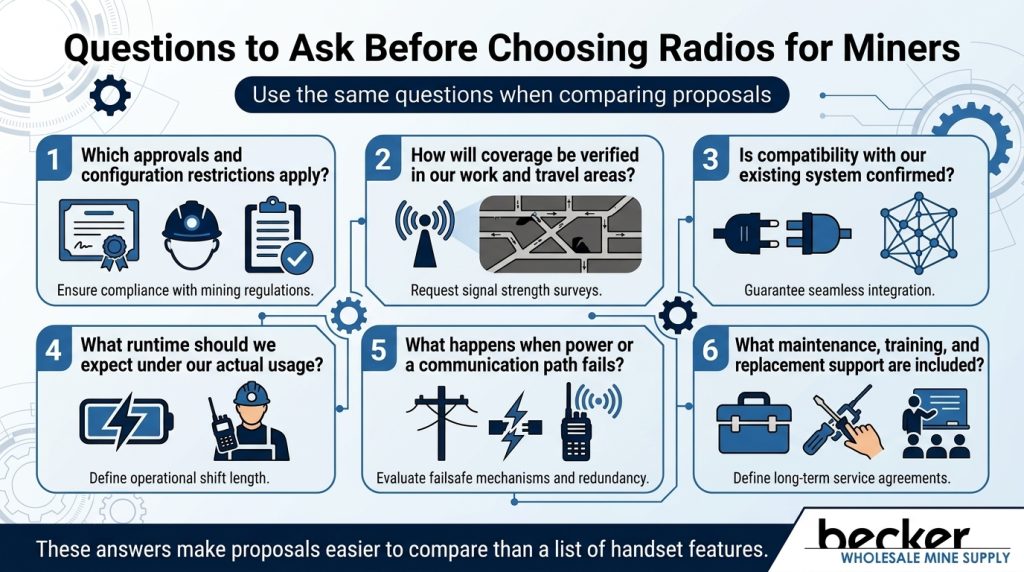
Use the same questions when comparing proposals:
- Which approvals and configuration restrictions apply?
- How will coverage be verified in our work and travel areas?
- Is compatibility with our existing system confirmed?
- What runtime should we expect under our actual usage?
- What happens when power or a communication path fails?
- What maintenance, training, and replacement support are included?
These answers make proposals easier to compare than a list of handset features.
GET IN TOUCH
In a hurry? Call us at +1-724-515-4993
Discuss Your Mine Communication Requirements With Us
At Becker Wholesale Mine Supply, we offer VHF and UHF leaky feeder systems and handheld radio products. Share your mine layout, existing equipment, and communication priorities with our team to discuss the available options
Frequently Asked Questions
Q: Can ordinary walkie-talkies work underground?
A: They may communicate over limited distances in some locations. That does not establish adequate coverage, safety approval, or suitability for the mine’s communication plan.
Q: Are all radios for miners intrinsically safe?
A: Do not assume so. Check the specific model, configuration, approval documentation, and intended operating environment.
Q: Does a leaky feeder system cover every part of a mine?
A: Not automatically. Coverage depends on installation and mine conditions, and some areas may need extensions or other communication arrangements.
Q: Is UHF always better than VHF underground?
A: No. Evaluate the installed system and measured site performance rather than choosing by frequency band alone.
Products That We Offer
- VHF Leaky Feeder System
- UHF Leaky Feeder System
- SMARTSENSE®FIXED MONITOR
- RNG-500VHF Leaky Feeder Cable
- UHF Low Loss Leaky Feeder Cable
- Kenwood NX-203/303 Radios
Take control of your mining communication systems today! With Becker Wholesale Mine Supply, the leading manufacturer in the USA. Contact us now and revolutionize your mining communication systems!