Choosing Gas Leak Monitor Tools for USA Mining Sites
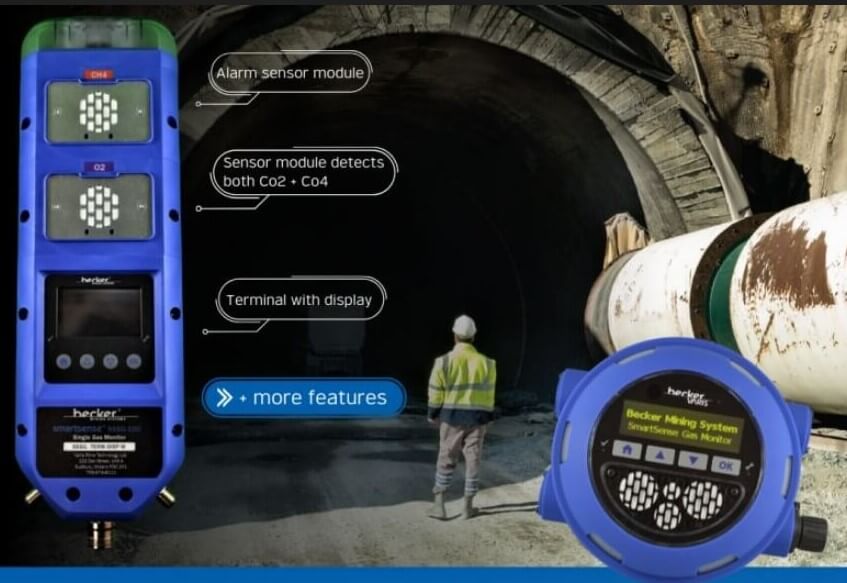
Underground mining environments across the United States do not forgive equipment failure or slow reactions. When atmospheric dynamics shift deep within a shaft, your crew relies entirely on raw hardware to detect the invisible changes before things turn lethal. At Becker Wholesale Mine Supply, we do not deal in paper specs or pristine laboratory ratings. We source and supply safety gear built for the real-world grit, heavy dust, and strict MSHA compliance that defines modern American mining operations. Selecting a rugged gas leak monitor is not a bureaucratic checkbox. It is the core line of defense protecting your workforce, stabilizing your daily production, and ensuring your operation stays online and penalty-free.
Key Takeaways
- Instant Hazard Isolation: Rapidly identifies volatile atmospheric shifts, toxic buildups, and localized oxygen drops.
- Multi-Gas Infrastructure: Deploys advanced electrochemical and infrared sensors to scan for multiple threats simultaneously.
- Triple-Threat Alerting: Uses high-decibel audio, high-visibility strobe arrays, and intense mechanical vibration to pierce through standard operational noise.
- Industrial Endurance: Features heavily reinforced, sealed outer casings engineered to resist high impact, deep moisture, and fine coal dust.
- Zero-Fail Compliance: Streamlines your daily maintenance routines and MSHA alignment to mitigate regulatory shutdown risks.
Why Is Atmospheric Gas Monitoring Critical in Underground Mining?
A reliable gas leak monitor continuously tracks shifting underground air composition to trigger immediate, automated evacuation protocols before combustible or toxic thresholds breach safety limits. When pocketed gasses break containment during cutting or blasting, you have seconds to act. This equipment stands watch where ventilation systems face heavy load or unexpected blocks.
The reality on the ground is that underground air chemistry changes without visual warnings. A pocket of gas does not tap you on the shoulder. Without continuous, sensor-driven verification, your crew is blind to the accumulating threats that can halt an entire operation in an instant.
Critical Atmospheric Hazards
- Methane: Highly volatile and explosive between 5% and 15% concentrations in standard air.
- Carbon Monoxide: Highly toxic, cumulative bloodstream poison that knocks out operators even at trace parts-per-million levels.
- Hydrogen Sulfide: Corrosive, lethal gas that rapidly destroys olfactory senses, eliminating natural scent warnings.
- Oxygen Deficiency: Rapidly induces cognitive failure and sudden unconsciousness when levels drop below 19.5%.
GET IN TOUCH
In a hurry? Call us at +1-724-515-4993
What Key Features Dictate Real-World Gas Detection Performance?
Industrial gas detection tools must feature simultaneous multi-sensor integration, high-output sensory alarms, impact-rated outer housings, simplified field-calibration mechanics, and high-capacity battery systems. If your gear cannot handle a drop onto a granite floor or a double shift in high humidity, it has no business being in your mine.
Here is the part most suppliers won’t tell you: a fancy digital display means absolutely nothing if the sensor face gets packed with rock dust and fouls out two hours into a shift. True operational readiness comes down to raw endurance and field-proven reliability.
| Detection Feature | Legacy Single-Gas Units | Modern Multi-Gas Systems |
| Simultaneous Scanning | One gas per device; increases belt clutter. | Tracks $\text{CH}_4$, $\text{CO}$, $\text{H}_2\text{S}$, and $\text{O}_2$ concurrently. |
| Alarm Mechanisms | Low-decibel tone; easily drowned out by machinery. | High-intensity strobe, 95dB horn, and motor vibration. |
| Housing Design | Basic molded plastics prone to stress fractures. | IP68-rated rubberized armor over polycarbonate. |
| Field Maintenance | Requires manual bench calibration and downtime. | Supports automated dock testing and rapid bump tests. |
| Power Management | Disposable cells or short-cycle rechargeable packs. | 24+ hour lithium-ion runtimes with fast-charge docks. |
How Do Portable, Fixed, and Wireless Monitor Systems Differ?
Different areas of a mining site require distinct hardware configurations, separating personal protection wear from localized area monitors and interconnected, facility-wide telemetry networks. A smart safety strategy does not lean on one single tool. It builds a layered grid of defenses from the individual belt clip up to the main dispatch office.
Technical Execution Modules
1. Portable Handheld Units
- Personal Protection: Fastened directly to a miner’s gear within the breathing zone to monitor individual exposure.
- High Mobility: Lightweight, low-profile designs that do not restrict movement in tight stopes or low seams.
- First-Line Defense: Serves as the ultimate mobile sensor path as teams move into unvented cuts.
2. Fixed Area Infrastructure
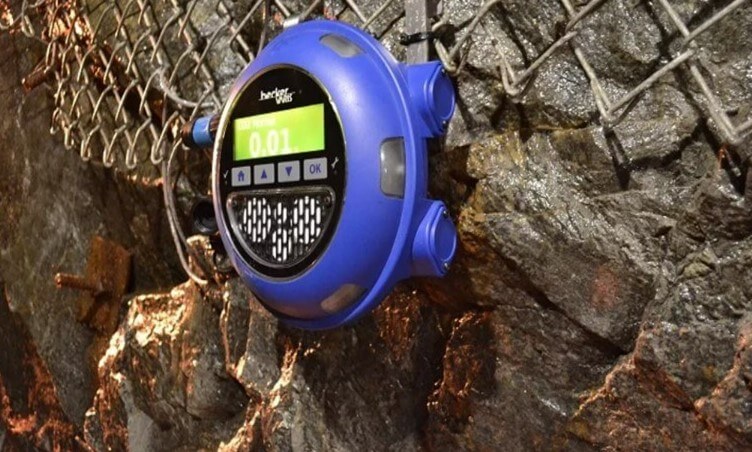
- Permanent Anchor Points: Bolted directly into high-risk structural areas like main exhaust lines and charging stations.
- Continuous Operation: Hardwired into facility power systems to deliver constant, uninterrupted environmental snapshots.
- Heavy Automation: Tied directly into local ventilation controls to ramp up auxiliary fans the moment gas spikes.
3. Wireless Networked Grids
- Centralized Data: Aggregates real-time sensor streams from across the entire property onto a single surface dashboard.
- Predictive Mapping: Tracks subtle gas migration patterns across complex multi-level layouts before crews enter.
- Remote Alarms: Empowers surface dispatchers to push evacuation commands down into specific deep zones instantly.
GET IN TOUCH
In a hurry? Call us at +1-724-515-4993
How Do You Select the Right Detection Hardware for Your Site?
Selecting a gas leak monitor requires aligning the specific chemical profiles of your geological formation with your shift runtimes, ventilation layouts, and internal maintenance capabilities. You do not buy gear based on a slick brochure. You buy it based on the exact environmental parameters your crew faces every single day.
High-Density Selection Checklist
- Geological Gas Profile: Verify sensor arrays match the exact target gases your formation is known to liberate.
- Environmental IP Rating: Ensure the outer housing can handle the specific moisture and ambient dust loading of your shafts.
- Shift-Length Matching: Match the internal battery capacity directly to your longest active production and travel windows.
- MSHA Certification: Confirm the entire device assembly carries valid intrinsic safety approvals for Class I, Division 1 areas.
- Fleet Interoperability: Check that new units interface seamlessly with your existing calibration docks and software.
Operational Optimization
- Bold Industry Entity: MSHA Permissibility Rules. Strict federal compliance mandates that all electronics run intrinsically safe circuitry to eliminate spark hazards in explosive atmospheres.
- Bold Industry Entity: Bump Testing Protocols. Daily verification tests expose sensors to a controlled gas concentration to ensure target accuracy before any worker goes down the hole.
- Bold Industry Entity: Electrochemical Sensor Drift. Natural degradation requires periodic calibration cycles every 30 to 90 days to correct inherent electronic reading offsets.
Expert Perspective: Do not cut corners on your daily bump tests to save a few bucks on calibration gas. The local 4 p.m. atmospheric pressure drops can alter sensor baseline stability faster than you think. A sensor that fails to respond accurately to a test gas will fail to respond when a methane pocket shears open. Treat your calibration station as the most critical piece of production equipment on your property.
Ready to Upgrade Your Mine Safety Infrastructure?
Evaluating your underground monitoring assets is the most direct step you can take today to protect your crew and safeguard your operational continuity. Becker Wholesale Mine Supply delivers field-hardened safety gear designed to survive punishing conditions and keep your site fully compliant.
Don’t wait for an unexpected atmospheric shift or an MSHA enforcement action to expose gaps in your hardware layout. Let our experienced team help you spec out an unyielding safety array tailored to your specific geological challenges.
Call Becker Wholesale Mine Supply today to secure a rugged gas leak monitor fleet built for the toughest jobs in America.
Frequently Asked Questions
Q: What is a gas leak monitor used for in USA mining applications?
A: A gas leak monitor is deployed to constantly analyze underground air for combustible methane, toxic carbon monoxide, hydrogen sulfide, and dangerous oxygen depletion levels. It serves as an automated early-warning mechanism to trigger immediate crew evacuations before atmospheric changes become life-threatening.
Q: How often do underground mining gas detectors require calibration?
A: Standard industrial units typically require comprehensive calibration every 30 to 90 days, supplemented by mandatory daily bump testing before every working shift. Regular calibration counters natural sensor drift and accounts for dust exposure, ensuring the internal components read gas percentages with absolute precision.
Q: Why are multi-gas detection tools preferred over single-gas units?
A: Underground mine environments rarely present a single isolated atmospheric threat, meaning multiple dangerous gases can accumulate simultaneously in a single zone. Multi-gas tools consolidate four or five vital sensor tracks into one compact housing, cutting down on crew gear weight while expanding overall situational awareness.
Q: What features make a gas monitor durable enough for field operations?
A: High-tier mining monitors use ruggedized, shatterproof polycarbonate shells wrapped in thick rubber armor alongside IP67 or IP68 water- and dust-resistant seals. This specialized construction prevents fine coal dust, grit, heavy vibration, and accidental tool drops from damaging the delicate internal sensing elements.
Q: How do wireless gas monitoring grids improve overall site safety?
A: Wireless telemetry networks stream real-time air data from deep underground directly up to surface command dashboards, keeping dispatchers fully informed. This constant connectivity lets safety managers spot creeping gas trends early, coordinate fast emergency responses, and deploy site-wide alerts at the push of a button.
Products That We Offer
- VHF Leaky Feeder System
- UHF Leaky Feeder System
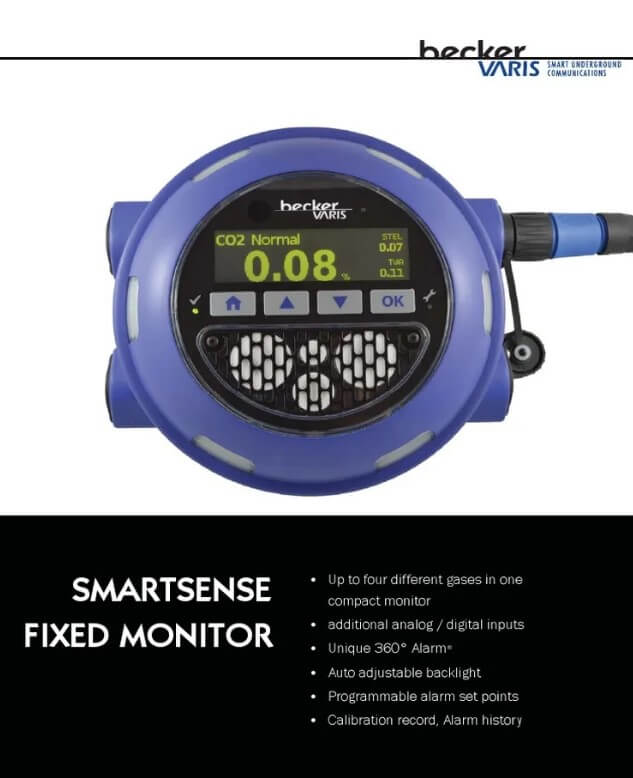
- SMARTSENSE®FIXED MONITOR
- RNG-500VHF Leaky Feeder Cable
- UHF Low Loss Leaky Feeder Cable
- Kenwood NX-203/303 Radios
Take control of your mining communication systems today! With Becker Wholesale Mine Supply, the leading manufacturer in the USA. Contact us now and revolutionize your mining communication systems!