What Makes Two Way Radio Communication Devices Mine-Ready?

Two way radio communication devices are mine-ready when they suit the mine’s environment and work reliably with its communication system. A rugged handheld radio alone may not provide coverage underground: the radio, its programmed settings, and the mine’s supporting infrastructure must work together.
That distinction matters when comparing radios for crews who work around machinery, dust, moisture, vibration, and changing underground conditions. At Becker Wholesale Mine Supply, we offer mining communication products, including Kenwood NX-203/303 radios and VHF and UHF leaky feeder systems.
Key Takeaways
- A mine-ready radio must match the site’s coverage system, frequency plan, and channel setup.
- Ruggedness, water and dust protection, audio, battery life, and controls all affect everyday use.
- Underground coverage depends on the radio system and mine layout, not just the handheld device.
- Emergency features help only when they are configured, understood, and included in site procedures.
- Confirm any required approvals and operating conditions with the mine’s safety and communications teams.
What Does “Mine-Ready” Mean For A Two Way Radio?
A mine-ready radio is a device selected and configured for the conditions and communication network where it will be used. It should be practical for workers to operate, withstand the expected work environment, and communicate through the mine’s system.
There is no single feature that makes every radio appropriate for every mine. Surface operations, underground tunnels, equipment areas, and hazardous locations can have different requirements. Before choosing a model, confirm where workers will use it, how they need to communicate, and what approvals the site requires.
1. It Must Work With The Mine’s Communication System
Compatibility is one of the first things to check. The radio needs to match the mine’s system and configuration, including its frequency band, channels, and any required digital or analog modes. A radio that cannot be programmed to the site’s settings may not communicate with the rest of the crew.
Underground coverage also depends on the mine’s layout and infrastructure. Rock can limit radio signal travel, so a handheld radio that works well on the surface may not provide reliable coverage by itself in tunnels. A leaky feeder system uses a cable network to carry radio signals along underground routes, where compatible radios can communicate with the system.
When reviewing options, ask:
- Which system and frequency bands does the radio support?
- Can it be programmed to the mine’s existing channels?
- Which areas does the communication system cover?
- Are there known dead zones or changing work areas?
- Does the site need radio communication between underground and surface crews?
These questions help determine whether a new handheld can fit the existing setup or whether the communication system also needs attention.
2. It Should Be Built For The Conditions On Site
Mining work can expose equipment to dust, moisture, impact, and vibration. A radio’s durability and ingress protection rating can help you compare devices, but the rating should match the conditions the radio will actually face. Check the manufacturer’s documentation and the mine’s requirements before selecting a device.
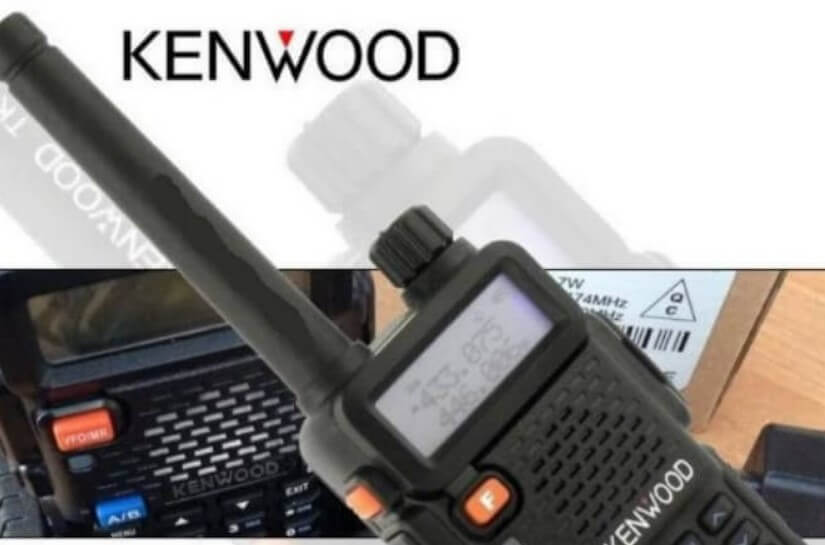
For example, Becker’s product page for the Kenwood NX-203/303 lists water and dust protection ratings of IP54/55 and MIL-STD-810 C/D/E/F/G. Those are specifications for the listed models; they should not be assumed for every radio or every operating condition.
Consider how the radio will be carried and used, too. Will it be worn on a belt, attached to work gear, or used with a headset? Can workers reach the push-to-talk button while wearing gloves? Will the display and controls remain usable in the lighting and conditions of the work area?
3. Audio Should Remain Clear In Noisy Work Areas
A radio is useful only when workers can understand what they hear and be understood when they respond. Machinery, ventilation, vehicle traffic, and hearing protection can all affect conversations.
Evaluate the complete setup: the radio speaker, microphone, headset or earpiece, and how workers will wear the equipment. If the radio supports emergency or group calling, confirm how those functions behave in the mine’s configured system. Workers should know how to select the right channel and use any special call features before they depend on them in the field.
GET IN TOUCH
In a hurry? Call us at +1-724-515-4993
4. Battery Life And Charging Should Fit The Shift
Battery performance needs to cover the expected work period, including time spent away from charging stations. Ask how long the radio can operate with the settings and accessories workers will use. Heavy transmission, accessories, and battery age may affect runtime, so published estimates may not match every shift.
A practical evaluation should include:
- How many hours the radio must operate between charges
- Whether spare batteries are available
- Where batteries will be charged and stored
- How crews will identify and replace weak or damaged batteries
The charging plan matters as much as the battery specification. A radio can have a suitable battery, but still become unavailable if spares, chargers, or rotation procedures are not planned.
5. Emergency Features Must Fit Site Procedures
Some radios include emergency call functions. Becker’s listing for the Kenwood NX-203/303 identifies emergency call features among the models’ listed capabilities.
That feature alone does not establish how a mine handles an emergency. The function must be programmed for the site, monitored by the appropriate people, and covered in worker training and procedures. Confirm what happens when the button is pressed, who receives the call, and how workers should communicate if the radio or network is unavailable.
6. Programming And Maintenance Should Be Manageable
Radio settings affect how crews communicate. Before deployment, confirm who will program and maintain the devices, how channels and user settings will be controlled, and how replacement radios will be configured. Keep an inventory of devices and batteries, and include radios in routine inspections for damage and function.
A radio that works on one channel during a bench check may still be configured incorrectly for the worker’s assigned area. Test devices with the mine’s actual system and communication procedures before putting them into regular service.
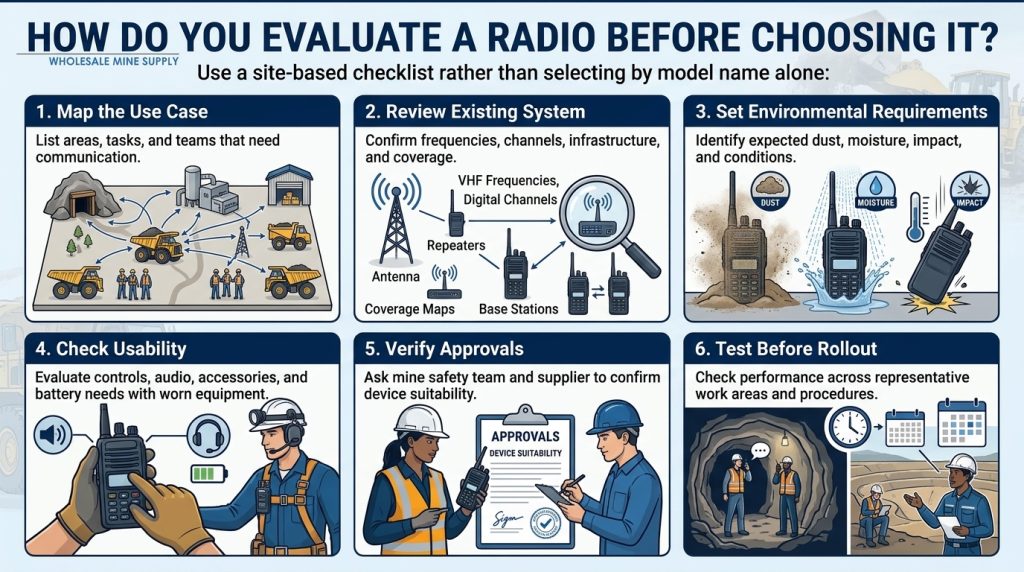
How Do You Evaluate A Radio Before Choosing It?
Use a site-based checklist rather than selecting by model name alone:
- Map the use case. List the areas, tasks, and teams that need radio communication.
- Review the existing system. Confirm frequencies, channels, infrastructure, and coverage requirements.
- Set environmental requirements. Identify expected dust, moisture, impact, and other operating conditions.
- Check usability. Evaluate controls, audio, accessories, and battery needs with the equipment workers will wear.
- Verify approvals. Ask the mine’s safety team and supplier to confirm the device is appropriate for the specific operating area.
- Test before rollout. Check radio performance across representative work areas and confirm workers understand the procedures.
GET IN TOUCH
In a hurry? Call us at +1-724-515-4993
Find Radios And Mine Communication Products
Becker Wholesale Mine Supply provides communication products for mining and other industries, including Kenwood NX-203/303 radios and VHF and UHF leaky feeder systems. Contact our team to discuss your site’s radio requirements, system compatibility, and operating conditions.
Frequently Asked Questions
Q: Can a regular two way radio work underground?
A: It depends on the mine’s communication system and layout. Rock can limit radio signals, so a handheld device may need to work with infrastructure such as a leaky feeder system for coverage along underground routes. Confirm compatibility and test coverage in the intended areas.
Q: What features should I compare when choosing mine radios?
A: Compare system compatibility, frequency and channel support, durability, water and dust protection, audio options, battery runtime, controls, and emergency functions. Then verify that the selected model meets the mine’s specific operating requirements.
Q: Does an emergency call button make a radio mine-ready?
A: No single feature is enough. An emergency function must be compatible with the communication system, programmed correctly, monitored, and covered in worker training and site procedures.
Q: Do underground radios need special approval?
A: Requirements depend on the mine, the operating area, and applicable rules. Confirm any required approvals with the mine’s safety team and the supplier before purchasing or deploying a device.
Q: Should we replace our radios or upgrade the communication system?
A: That depends on the source of the problem. If radios are incompatible, poorly configured, or unreliable, replacing or reprogramming devices may help. If coverage gaps come from the mine’s layout or infrastructure, the system may also need review. Test both parts before deciding.
Products That We Offer
- VHF Leaky Feeder System
- UHF Leaky Feeder System
- SMARTSENSE®FIXED MONITOR
- RNG-500VHF Leaky Feeder Cable
- UHF Low Loss Leaky Feeder Cable
- Kenwood NX-203/303 Radios
Take control of your mining communication systems today! With Becker Wholesale Mine Supply, the leading manufacturer in the USA. Contact us now and revolutionize your mining communication systems!