Leaky Feeder Cable Suppliers for Modern Mine Networks
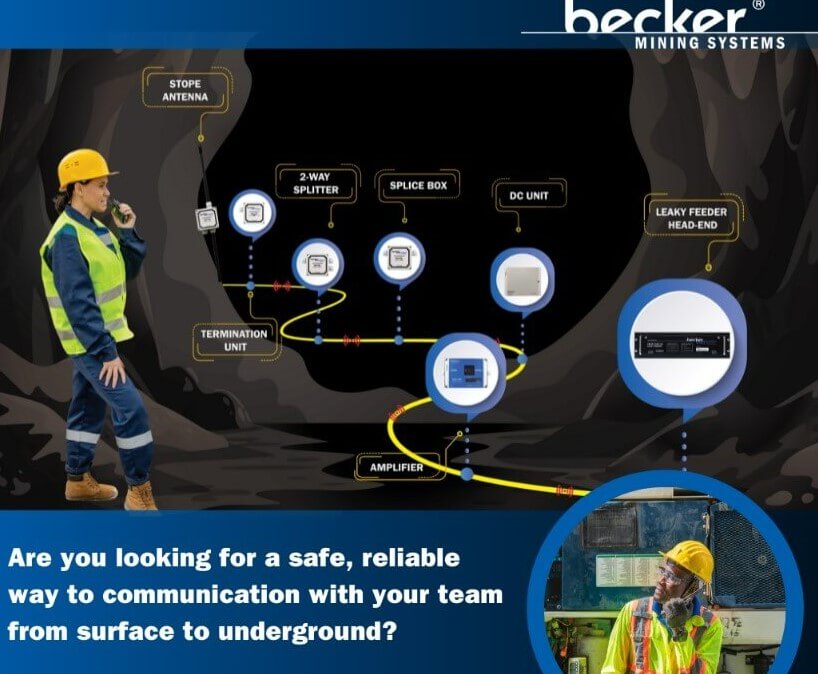
In the gut of a deep-shaft mine, “out of service” isn’t just an inconvenience—it’s a massive liability. Standard radio waves don’t play nice with magnetite or tight headings; they bounce, die, and leave your crew blind. That’s where leaky feeder cable suppliers like Becker Wholesale Mine Supply step in. We don’t just sell wire; we provide the backbone for voice, data, and emergency tracking that keeps your operation moving. When the rock starts talking, your team needs to be talking louder, and our systems ensure that the signal reaches every corner of the face.
Key Takeaways
- Continuous Coverage: Leaky feeder cables act as a 2-mile-long antenna, eliminating dead zones in deep tunnels.
- Ruggedized Design: Mining-grade cables are built to withstand the “Pasco County style” humidity and high-impact vibrations of underground blasting.
- Multi-Stream Support: Modern systems carry more than just voice; they handle telemetry, video, and atmospheric monitoring.
- Strategic Spacing: High-gain amplifiers allow for signal runs exceeding 500 meters between active components.
Why Is Reliable Communication Non-Negotiable in Modern Mining?
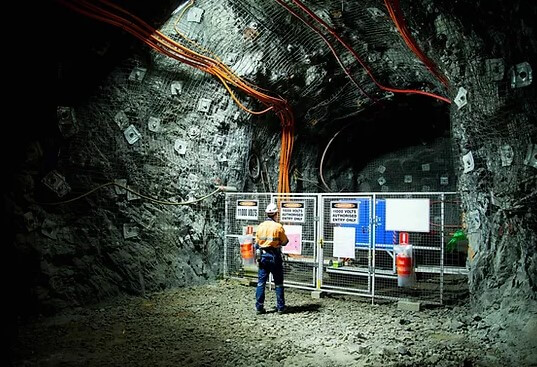
Underground mining is a high-stakes environment where a five-minute communication lag can cost thousands in lost production or, worse, compromise worker safety. Traditional wireless setups fail because dense rock formations and heavy machinery act as natural signal jammers. Without a specialized network from proven leaky feeder cable suppliers, your team is essentially operating in a black box, risking delayed emergency responses and disjointed coordination between the face and the surface.
Operational Risk Mitigation
- Emergency Response: Immediate broadcast capability for “All-Stop” orders during seismic events.
- Blast Coordination: Precise timing and clearance confirmation between levels to prevent accidental re-entry.
- MSHA Compliance: Meeting strict federal standards for secondary communication and tracking.
Production Efficiency
- Machine Diagnostics: Real-time data transmission from LHDs and continuous miners to surface mechanics.
- Reduced Idle Time: Foremen can redirect haul trucks instantly based on skip-hoist availability.
- Streamlined Logistics: Managing supply deliveries to specific headings without requiring a “runner” to find the supervisor.
GET IN TOUCH
In a hurry? Call us at +1-724-515-4993
How Does a Leaky Feeder Cable System Actually Work?
A leaky feeder system functions as a “porous” coaxial cable that intentionally allows radio frequency (RF) energy to leak out along its entire length. While a standard cable is designed to trap the signal inside, this specialized mining cable features precise gaps in the shielding. This turns the entire cable run into a continuous antenna. Portable radios and sensors don’t need line-of-sight to a base station; they just need to be within the “aura” of the cable to transmit and receive crystal-clear data.
The Strategic Framework: 4 Stages of Signal Distribution
- Head-End Interface: The surface base station injects the VHF/UHF signal into the primary trunk line.
- Radiating Transmission: The signal “leaks” through the slotted outer conductor, providing a 30-meter wireless envelope.
- Active Amplification: Line boosters (amplifiers) are placed every 350 to 500 meters to compensate for signal attenuation.
- Device Integration: Handheld units, PLC controllers, and environmental sensors “tap” into the radiated field for two-way communication.
What Makes Becker the Choice for Leaky Feeder Cable Suppliers?
Choosing a partner for your mine’s infrastructure isn’t about finding the lowest bidder; it’s about finding the outfit that understands the grit of a 12-hour shift. Becker Wholesale Mine Supply doesn’t just ship boxes; we engineer solutions that handle the dust, the damp, and the mechanical abuse of a working heading. As premier leaky feeder cable suppliers, we provide the technical heavy lifting—from system design to troubleshooting—ensuring your network scales as fast as your mine expands.
Comparison: Becker Systems vs. Generic Wireless Solutions
| Feature | Becker Leaky Feeder | Standard WiFi/Mesh |
| Signal Path | Continuous along the cable | Point-to-point (Line of sight) |
| Ruggedness | MSHA-rated flame-resistant | Delicate plastic components |
| Range | Miles of coverage via amplifiers | Limited to ~100ft per node |
| Maintenance | Low (Passive cable focus) | High (Requires constant power) |
| Interference | Minimal (Shielded trunk) | High (Rock density/Reflection) |
Is the RNG-500 VHF Cable Right for Your Underground Network?
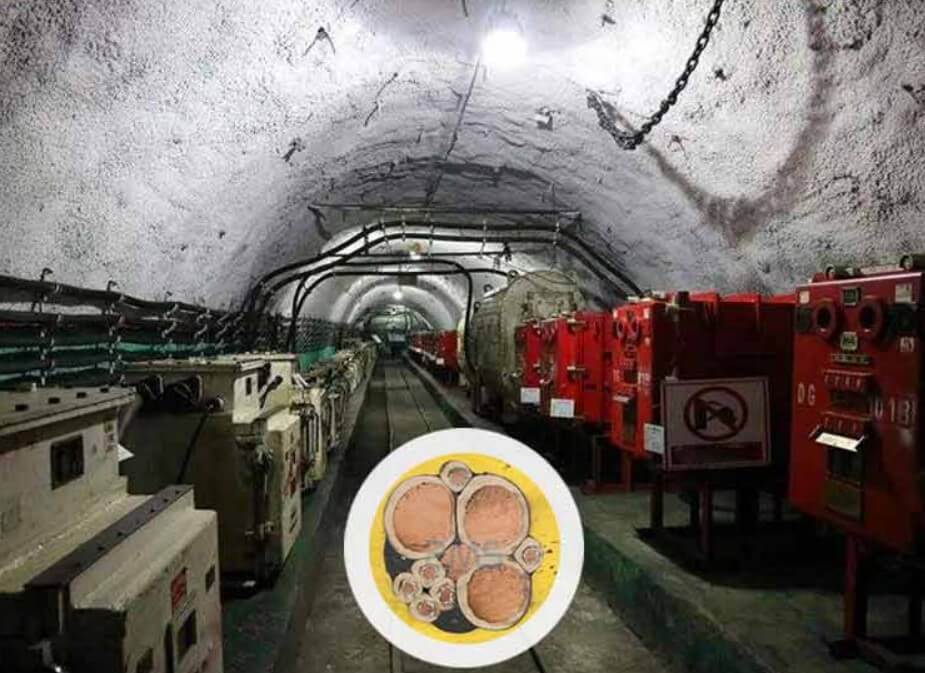
The RNG-500 VHF cable is the workhorse of the Becker catalog, specifically engineered to provide high-bandwidth communication across massive underground footprints. This cable acts as a radiating antenna that can carry multiple channels simultaneously without “stepping” on the signal. When you’re dealing with the complex geometry of a room-and-pillar operation, the RNG-500 provides the flexibility to snake around corners while maintaining a consistent 30-meter off-cable signal radius.
Technical Execution Stats
- Bandwidth: 30 MHz capacity for simultaneous voice and data streams.
- Amplifier Spacing: Robust enough to maintain signal integrity over 500-meter intervals.
- Safety Rating: Features a flame-retardant jacket that won’t off-gas toxic fumes in a fire.
- Durability: High tensile strength to prevent “snapping” during ground shifts or accidental strikes.
GET IN TOUCH
In a hurry? Call us at +1-724-515-4993
Why Should You Opt for UHF Low-Loss Leaky Feeder Cables?
UHF Low-Loss cables are the go-to for operations requiring high-fidelity data transmission and minimal signal degradation over extreme distances. In deep-vein mining where every decibel of signal strength counts, this cable’s inner dielectric insulation and slotted outer conductor work in tandem to ensure the “juice” gets to the end of the line. It’s the difference between a garbled radio call and a clear directive that keeps the production line moving.
Master Craftsman Entity Grounding
- Dielectric Insulation: Prevents signal bleed-off and maintains impedance across the run.
- VHF (Very High Frequency): Ideal for long-range penetration and basic voice commands.
- UHF (Ultra High Frequency): Best for high-density data, video feeds, and automation control.
- MSHA Part 75: Mandatory safety standards for underground communication systems that we strictly follow.
Expert Perspective: The “Boots on the Ground” Insight
“Most guys think you can just hang cable and forget it. The reality on the ground is that your amplifiers are your lifeblood. If you don’t balance your gain correctly, you’ll end up with ‘hot spots’ that fry your signal and ‘dead zones’ where your radios are useless. We tell our clients: focus on the spacing. A perfectly tuned 500m run is better than a poorly planned 1000m run every single time.”
Ready to Overhaul Your Underground Connectivity?
When you’re a mile underground, “good enough” communication is a gamble you can’t afford to take. Becker Wholesale Mine Supply bridges the gap between raw production and modern safety by providing the most ruggedized equipment on the market. As leading leaky feeder cable suppliers, we don’t just provide parts—we provide the peace of mind that your crew is never truly alone in the dark. Take the Next Step Toward a Safer Mine
Maximize your uptime and protect your crew with a communication system engineered for the world’s toughest environments. Our team is ready to develop a custom layout to address your specific geological challenges. Call and speak with a Becker specialist today.
Frequently Asked Questions
What is the maximum range of a leaky feeder cable?
While the cable itself can run for miles, the wireless “leak” typically extends 30 meters (approx. 100 feet) from the wire. To maintain signal strength over long distances, you must install line amplifiers every 350 to 500 meters.
Can leaky feeder systems handle video and data?
Yes. Modern systems, particularly those using UHF low-loss cables, are designed to carry high-speed data for environmental sensors, worker tracking (RFID), and even remote video monitoring of conveyor belts.
How does moisture affect underground signal quality?
In high-humidity environments, standard cables can corrode or experience “signal soak.” Becker’s cables use specialized jackets and sealed connectors to prevent water ingress from degrading your RF performance.
Is it difficult to expand an existing leaky feeder network?
Not if it’s designed correctly. Our systems are modular, allowing you to “splice and grow.” As your mine advances into new headings, you simply add more cable and the necessary amplifiers to extend the coverage.
What is the difference between active and passive components in a mine network?
Passive components are the cables and splitters that don’t require power. Active components, like amplifiers and head-end units, require a power source to “boost” the signal and keep it moving through the system.
Products That We Offer
- VHF Leaky Feeder System
- UHF Leaky Feeder System
- SMARTSENSE®FIXED MONITOR
- RNG-500VHF Leaky Feeder Cable
- UHF Low Loss Leaky Feeder Cable
- Kenwood NX-203/303 Radios
Take control of your mining communication systems today! With Becker Wholesale Mine Supply, the leading manufacturer in the USA. Contact us now and revolutionize your mining communication systems!