Gas Leak Detector Device for High-Risk Mining Areas
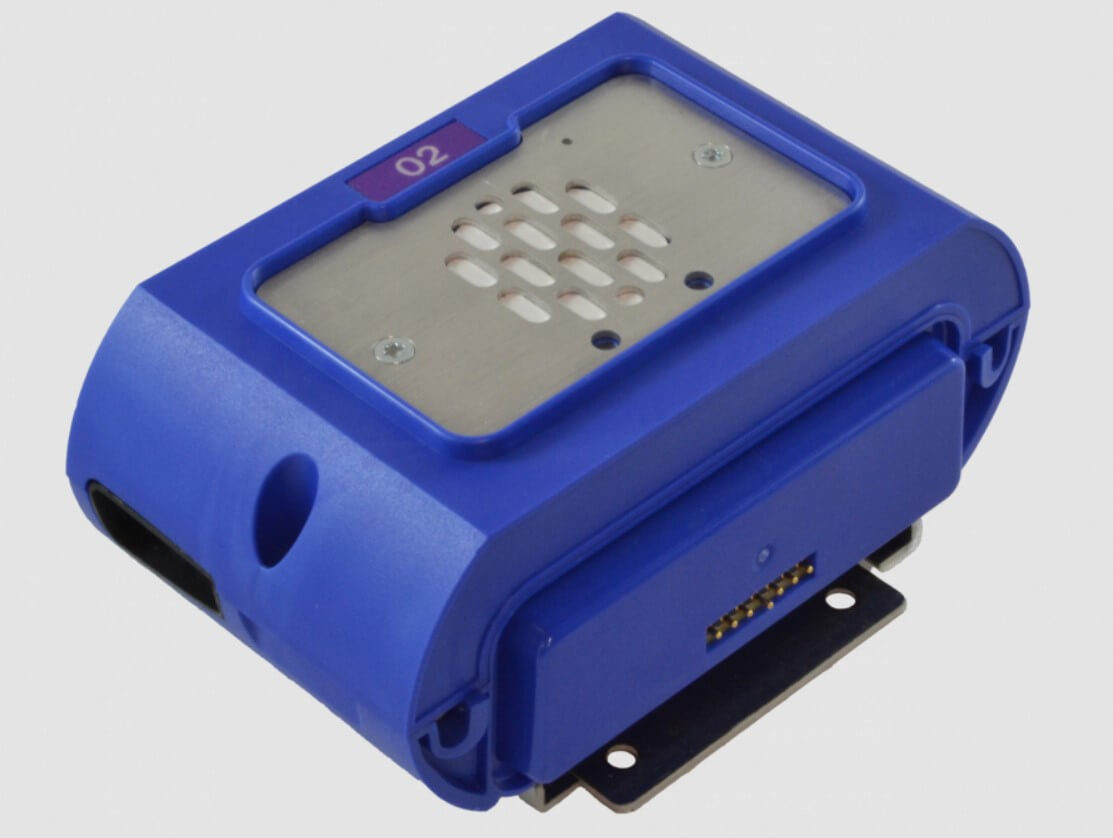
The subterranean world doesn’t play fair. In the deep pockets of American mines, the air you breathe is often the first thing to turn against you. Whether it’s a slow methane creep or a sudden carbon monoxide spike from a failing engine, a high-caliber gas leak detector device is the only thing standing between a productive shift and a total catastrophe. At Becker Wholesale Mine Supply, we don’t just sell gadgets; we provide the ruggedized hardware that keeps miners breathing and operations moving.
Key Takeaways
- Instant Threat Detection: Real-time sensors identify explosive and toxic gases before they reach lethal concentrations.
- Durability is Non-Negotiable: True mining-grade devices must withstand 100% humidity, coal dust, and physical impact.
- Compliance & Safety: Meeting MSHA and OSHA standards requires continuous monitoring, not just “spot checks.”
- Multi-Gas Versatility: Modern units track up to five gases simultaneously to cover the full spectrum of underground risks.
Why is a Gas Leak Detector Device Critical for Mine Safety?
A gas leak detector device serves as the primary life-preservation tool in environments where ventilation can fail and geological pockets release silent killers. In the tight confines of a shaft, gases like methane and CO don’t dissipate—they pool. These devices provide the 40-second head start needed to evacuate or kick on emergency scrubbers before a spark turns a workspace into a combustion chamber.
What Hazards Do Mining Gas Detectors Specifically Target?
Mining-specific detectors are engineered to identify “The Fatal Four”: methane, carbon monoxide, hydrogen sulfide, and oxygen depletion. While standard industrial sensors might lag, a specialized gas leak detector device used in mining is calibrated for the high-pressure, low-oxygen realities of the face. It’s about catching the “silent” threats that your senses simply aren’t built to find until it’s too late.
The Strategic Safety Framework
- Atmospheric Mapping: Before the first pick hits the wall, use fixed sensors to establish a baseline of air quality in the “dead zones” of the mine.
- Personal Protection Layering: Every hand on the crew carries a portable unit. This creates a mobile “mesh” of detection that moves with the workforce.
- Active Ventilation Syncing: Integrate your detection hardware with the mine’s HVAC system to automate air-flow increases the moment a threshold is crossed.
- Rigorous Calibration Cycles: Treat your sensors like your life depends on them—because it does. Monthly “bump tests” ensure the chemistry in the sensor hasn’t been “poisoned” by dust.
GET IN TOUCH
In a hurry? Call us at +1-724-515-4993
What Features Define a Reliable Gas Leak Detector Device?
A reliable gas leak detector device must feature “triple-threat” alerting—piercing audible alarms, high-visibility strobes, and vibrating haptics that cut through the roar of heavy machinery. Beyond the alarm, the housing needs an IP68 rating. If a device can’t survive being dropped in a sump or coated in abrasive rock dust, it has no business being underground in a high-stakes environment.
Technical Cluster: Built for the Grit
- Infrared Methane Sensors: Unlike older pellistor beads, IR sensors don’t “burn out” when exposed to high gas concentrations.
- Electrochemical Cells: These provide surgical precision for toxic gases like $H_2S$ and $CO$ at the parts-per-million level.
- Data Logging Hubs: Every hit and “near miss” is recorded, providing the paper trail required for MSHA audits and safety post-mortems.
How Does Becker Wholesale Mine Supply Compare?
| Feature | Standard Industrial Grade | Becker Wholesale Mine Supply |
| Chassis Build | Plastic / Lightweight | Reinforced Polycarbonate / Rubberized |
| Dust Resistance | Basic Filters | Multi-Stage Sintered Stainless Steel |
| Sensor Life | 12–18 Months | 3–5 Years (Long-Life Series) |
| Connectivity | Bluetooth Only | Mesh Radio / Wi-Fi / Hardwired |
Which Mining Terms Define Your Safety Grounding?
- Permissible Equipment: Hardware certified by MSHA for use in “gassy” mines where explosive atmospheres are a constant risk.
- Lower Explosive Limit (LEL): The minimum concentration of a gas in air that can ignite; your gas leak detector device is your early warning for this threshold.
- Bump Testing: The daily practice of briefly exposing the sensor to a known gas concentration to verify it actually “sees” the threat.
Expert Perspective: The “Dead Air” Reality
Pro Tip: Don’t just clip your monitor to your belt. Gases have different weights. Methane rises, while $CO_2$ and $H_2S$ sink into the floor. If you’re working a low-seam area, your detector needs to be positioned to catch the specific gas you’re most worried about that day. A “chest-high” clip might miss the methane pooling at the roof.
How Does Becker Integrate These Devices into Your Operation?
Becker Wholesale Mine Supply doesn’t just drop a box on your loading dock; we calibrate the solution to your specific geology. We look at your ventilation maps and your machinery’s exhaust profiles to determine if you need a fixed-point array or a fleet of rugged portables. It’s about building a “shield” of data that surrounds your crew from the moment they skip down to the moment they cage out.
Implementation Roadmap
- Site Audit: We identify the “high-risk” pockets where gas is most likely to accumulate.
- Hardware Deployment: Provisioning a mix of fixed and wearable gas leak detector device units.
- Crew Training: We don’t just show them the “on” button; we teach them how to interpret TWA (Time Weighted Average) and STEL (Short Term Exposure Limit) readings.
GET IN TOUCH
In a hurry? Call us at +1-724-515-4993
Mastering Your Mine’s Atmospheric Safety
The difference between a “close call” and a recovery operation often comes down to the quality of your sensors. By moving away from generic hardware and toward mining-hardened systems, you’re not just checking a compliance box—you’re ensuring that the “boots on the ground” have a fighting chance when the geology shifts.
Ready To Secure Your Site?
Contact Becker Wholesale Mine Supply today to spec out a custom gas leak detector device fleet that’s as tough as your crew.
Frequently Asked Questions
What is the lifespan of a typical gas leak detector device?
In a mining environment, the sensors generally last 2 to 3 years, though the ruggedized housing can last a decade with proper maintenance and sensor swaps.
Can one device detect every type of gas?
Most “multi-gas” units handle 4 or 5 gases (typically $O_2$, LEL, $CO$, and $H_2S$). For exotic gases like $NO_2$ or $SO_2$, specific sensor modules must be installed.
How do I know if my detector is still accurate?
You must perform a “bump test” before every shift. If the device doesn’t alarm when exposed to a test gas, it needs a full calibration or a sensor replacement.
Are these devices waterproof?
Mining-grade detectors are typically rated IP67 or IP68, meaning they can survive full submersion and high-pressure washdowns.
What is the difference between “Fixed” and “Portable” detection?
Fixed systems provide 24/7 monitoring of specific high-risk zones (like chargers or sumps), while portables protect the individual miner as they move through different atmospheric pockets.
Products That We Offer
- VHF Leaky Feeder System
- UHF Leaky Feeder System
- SMARTSENSE®FIXED MONITOR
- RNG-500VHF Leaky Feeder Cable
- UHF Low Loss Leaky Feeder Cable
- Kenwood NX-203/303 Radios
Take control of your mining communication systems today! With Becker Wholesale Mine Supply, the leading manufacturer in the USA. Contact us now and revolutionize your mining communication systems!