Methane Detector Options for Coal Mines: Sensor Types and Placement

Methane is one of the biggest hazards in underground coal mining. It has no color and no smell, and it can build up quickly when ventilation changes or new coal is cut. A reliable methane detector gives miners and managers an early warning before gas reaches dangerous levels. But not every detector works the same way, and where you place it matters as much as which one you buy.
At Becker Wholesale Mine Supply, we’ve supplied mines since 2005 and offer gas monitoring alongside our communication systems. This guide explains the main methane detector sensor types, how to think about placement and what to look for when you compare fixed monitors.
Key Takeaways
- Methane becomes explosive between about 5% and 15% by volume in air, so detectors are set to alarm well below that range.
- The two most common sensor types are catalytic bead and infrared, and each has strengths and limits.
- Methane is lighter than air, so it tends to collect near the roof and in high spots.
- Fixed monitors watch key locations all the time, while portable detectors go with the miner.
- Calibration records, alarm history and clear displays help teams trust and act on readings.
Why Methane Detection Matters
Methane is released from coal seams as they are mined. Good ventilation dilutes it and carries it away. When airflow drops, or when mining cuts into a gas pocket, levels can climb. If methane in air reaches its lower explosive limit (LEL), about 5% by volume, a spark can ignite it.
Federal rules for ventilation and methane checks in underground coal mines are found in 30 CFR Part 75, Subpart D. Your mine’s ventilation plan will also set where and how methane must be checked.
What Are the Main Methane Detector Sensor Types?
Catalytic bead sensors
Catalytic sensors burn a tiny amount of gas on a heated bead and measure the change in heat. They respond well to methane and many other flammable gases. Their limits are worth knowing:
- They need oxygen to work, so readings may be off in low-oxygen air.
- Some chemicals, such as silicones, can poison the sensor over time.
- They can be damaged by very high gas levels.
Infrared sensors
Infrared (IR) sensors measure how much infrared light methane absorbs. They have some clear benefits:
- They don’t need oxygen to measure methane.
- They resist poisoning from many chemicals.
- They can measure across a wide range, up to 100% by volume.
IR sensors can cost more and don’t detect gases like hydrogen that don’t absorb infrared light.
Comparing the two
| Feature | Catalytic Bead | Infrared |
|---|---|---|
| Needs oxygen | Yes | No |
| Poisoning risk | Higher | Lower |
| High range use | Limited | Up to 100% by volume |
| Detects hydrogen | Yes | No |
| Typical upkeep | Regular checks for drift and poisoning | Regular checks for drift and dirty optics |
GET IN TOUCH
In a hurry? Call us at +1-724-515-4993
Where Should a Methane Detector Be Placed?
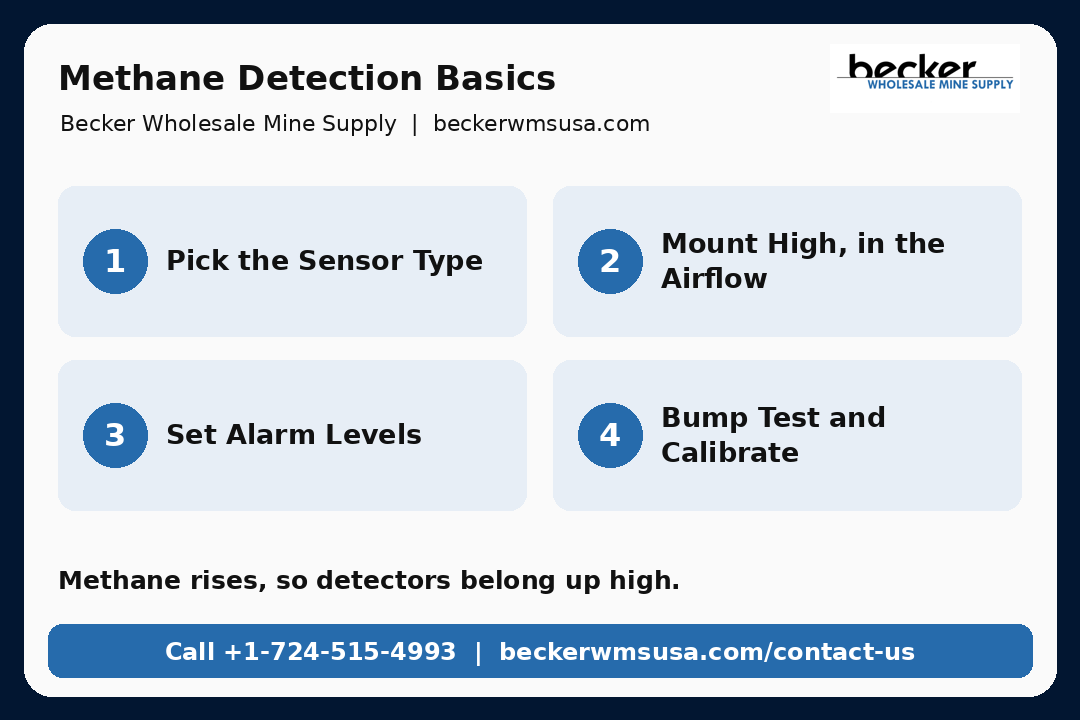
Placement can make or break a detection system. Because methane is lighter than air, it tends to rise and collect near the roof, in cavities and at high points. Common placement areas include:
- Near the roof at the working face and in return airways
- At high points where gas can pool
- Near equipment that could spark
- Along belt entries and other areas set by the ventilation plan
Detectors should sit where airflow carries gas past them, not in dead pockets that hide what’s happening nearby. Keep them clear of water spray and direct dust where possible, and make sure displays are easy to read.
Fixed vs. Portable Detection
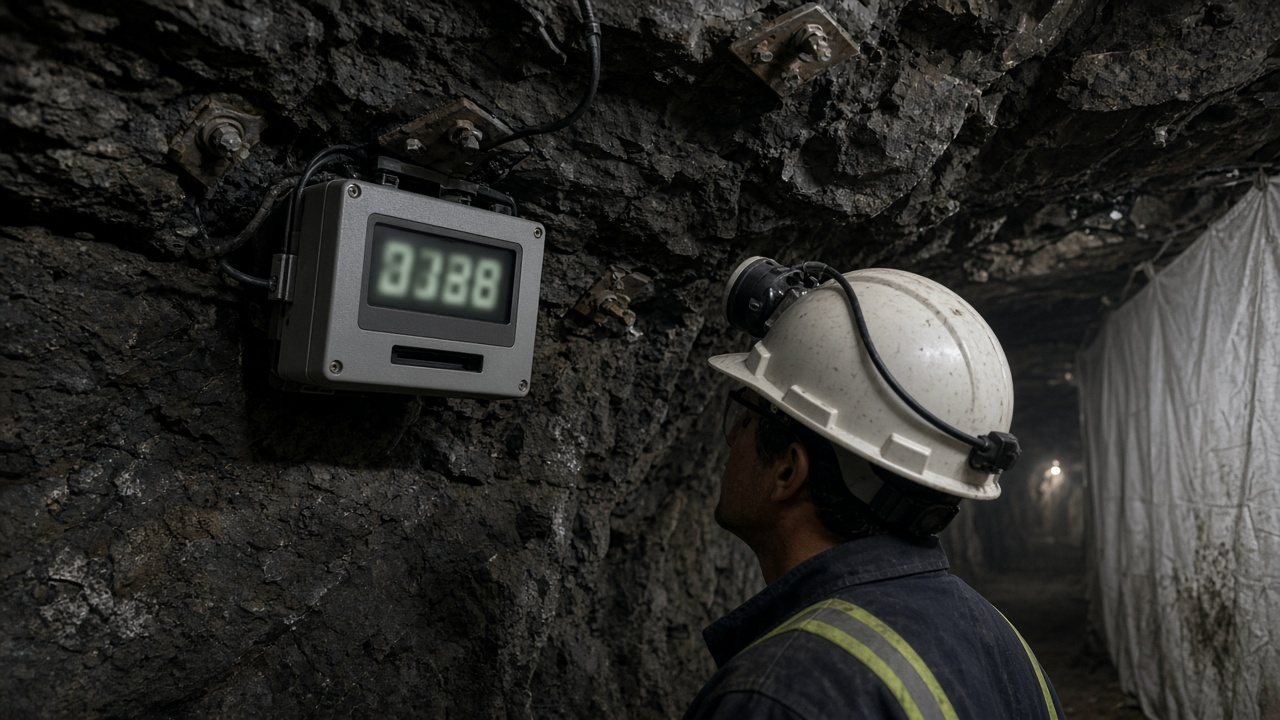
Fixed monitors stay in one place and watch it around the clock. They can feed data to a control room and trigger alarms or equipment shutdowns. Portable and personal detectors travel with the miner and warn the person carrying them. Most mines use both.
What to Look For in a Fixed Methane Detector
When comparing fixed monitors, look for:
- Ranges that fit your needs. Our SMARTSENSE® fixed monitor offers methane ranges of 0-5% v/v and 0-100% v/v.
- Multi-gas capability. The SMARTSENSE® monitor holds up to four gas sensors in one compact unit.
- Programmable alarms. It has three fully programmable alarm set points for alarm and output controls.
- Records. It stores calibration records, alarm history and data logs for post-accident investigation.
- Visibility. Its large display can be read from up to 5 meters away, and the unique 360° Alarm® makes alarms easier to notice.
- Rugged build. It carries an IP67 rating.
Keep Detectors Accurate
A methane detector is only as good as its last calibration. Follow the maker’s schedule for bump tests and calibration, and keep records. Replace sensors when they reach the end of their life or fail calibration.
GET IN TOUCH
In a hurry? Call us at +1-724-515-4993
Plan the Response, Too
Detection only helps if people know what to do when an alarm sounds. Make sure every crew member knows what each alarm level means, who to call and when to leave the area. Practice the response during drills. Link fixed monitors to the control room where possible, so someone on the surface sees the alarm at the same time as the crew underground. Review alarm history after each event to learn what caused it and whether ventilation needs to change.
Talk to Becker Wholesale Mine Supply
If you’re planning new gas monitoring or upgrading older detectors, our team can help you compare options for your mine. Contact us or call +1-724-515-4993.
Frequently Asked Questions
Q: What does a methane detector measure?
A: It measures the level of methane in the air, usually as a percent of volume or a percent of the lower explosive limit.
Q: Which is better, catalytic or infrared?
A: Each has strengths. Infrared sensors don’t need oxygen and resist poisoning. Catalytic sensors respond to more flammable gases, including hydrogen.
Q: Where should methane detectors go underground?
A: Near the roof and at high points where methane collects, at the working face, in returns and near equipment that could spark, following the ventilation plan.
Q: How often should a methane detector be calibrated?
A: Follow the maker’s schedule and your mine’s plan. Bump test often and calibrate on schedule, and keep records of both.
Q: Can one fixed monitor detect methane and other gases?
A: Yes. The SMARTSENSE® fixed monitor can hold up to four gas sensors in one unit.
Products That We Offer
- VHF Leaky Feeder System
- UHF Leaky Feeder System
- SMARTSENSE®FIXED MONITOR
- RNG-500VHF Leaky Feeder Cable
- UHF Low Loss Leaky Feeder Cable
- Kenwood NX-203/303 Radios
Take control of your mining communication systems today! With Becker Wholesale Mine Supply, the leading manufacturer in the USA. Contact us now and revolutionize your mining communication systems!