Gas Detector Calibration Intervals: What Mine Safety Teams Should Plan
A gas detector calibration schedule should match the detector’s use, the mine’s applicable requirements, and the manufacturer’s instructions. There is no single interval that applies to every fixed, machine-mounted, and portable detector.
For example, U.S. regulations require certain methane monitors used on underground coal mining equipment to be calibrated with a known air-methane mixture at least every 31 days. Specified atmospheric monitoring systems in certain underground metal and nonmetal mines must be checked with a known methane mixture and calibrated if needed at least every 30 days. Other detectors may have different requirements.
The practical job for mine safety teams is to turn those requirements into a schedule people can follow—and to define what happens when a detector fails a check, is damaged, or works in harsh conditions.
Key Takeaways
- Set the interval by detector type, application, manufacturer instructions, and applicable mine rules.
- A bump test checks whether gas reaches the sensor and the alarms respond; it does not confirm measurement accuracy.
- Some methane monitors have specific 30- or 31-day regulatory checks and calibration requirements.
- Document each check, calibration, adjustment, and out-of-service decision.
- Reassess the schedule when conditions, equipment, or detector performance change.
Start With the Detector’s Role
Before assigning a date, identify what each detector does. A fixed monitor provides continuous readings at selected locations. A machine-mounted monitor may warn workers or trigger equipment shutdowns. A portable detector travels with a worker or is used to check changing work areas.
Those roles can be subject to different requirements and procedures. Make an inventory that records each unit’s model, location or assigned user, gases measured, sensor type, applicable approval, and manufacturer’s calibration instructions. Then verify which mine rules apply to that exact use.
This avoids a common planning mistake: applying one schedule across every detector simply because the units measure similar gases.

GET IN TOUCH
In a hurry? Call us at +1-724-515-4993
Separate Daily Function Checks From Calibration
A bump test and a calibration answer different questions. A bump test exposes the detector to test gas to see whether gas reaches the sensor and the alarm functions. It does not establish that the displayed reading is accurate. A calibration check compares the instrument’s response with the known test gas; a full calibration adjusts the instrument if needed.
For portable gas monitors, OSHA-hosted guidance references the ISEA recommendation to conduct a bump test or calibration check before each day’s use, following the manufacturer’s instructions. If a unit fails, it should receive a full calibration before use; if it still fails, remove it from service and contact the manufacturer.
These pre-use checks do not replace any required scheduled calibration. Put each activity on the calendar as a separate task so staff do not mistake a successful bump test for a completed calibration.
Build the Schedule Around Applicable Requirements
Use a schedule that separates routine checks from formal calibration events. The intervals below are examples of specific U.S. requirements and guidance, not a universal schedule for all mine detectors.
For underground coal mine methane monitors, the regulation also calls for trained personnel and records retained for one year. For certain atmospheric monitoring systems in metal and nonmetal mines, the rule specifies a check at least every 30 days, with calibration if needed. Confirm the current rule and mine classification before using these intervals in a site procedure.
Adjust the Plan for Mine Conditions
A calendar interval is only one part of a reliable program. Dust, moisture, temperature changes, physical impacts, blocked sensor openings, and exposure to concentrations outside the detector’s intended range can affect readings or response. OSHA also advises using test gas that is certified, traceable, and not past its expiration date, along with the correct regulator, tubing, and adapter for the instrument.
Set clear event-based checks in addition to calendar dates. A detector may need attention after a failed bump test, a failed calibration check, a drop or other damage, sensor replacement, unusual readings, or exposure to extreme conditions. Follow the model’s instructions to decide whether the next step is a calibration, repair, or removal from service.
Repeated drift is also useful information. If a detector needs large corrections at successive calibrations, investigate the sensor, test setup, and operating conditions instead of treating each adjustment as routine.
Make Records Useful in the Field
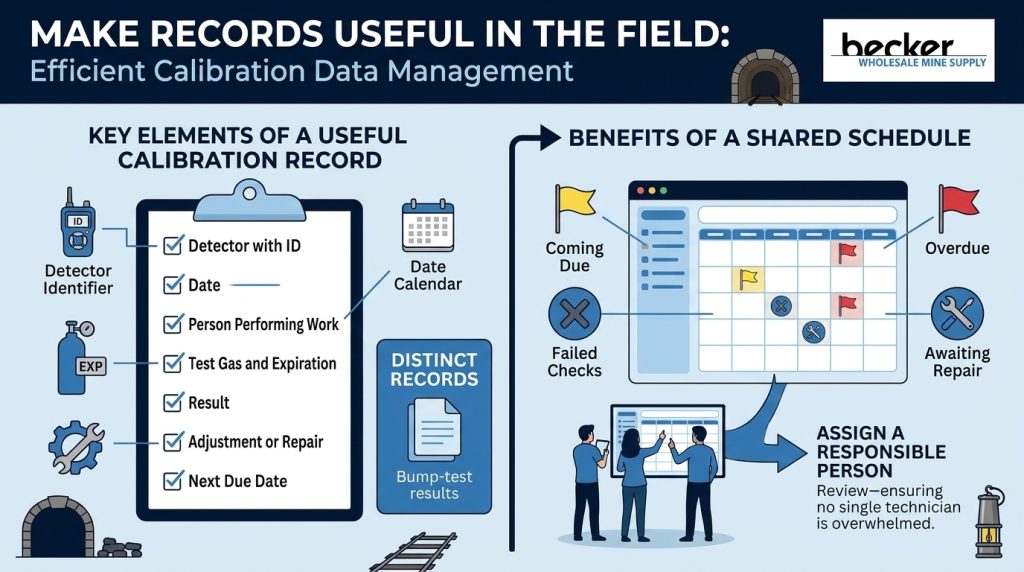
A useful calibration record should let the next person understand what happened and when. Record the detector identifier, date, person performing the work, test gas and expiration date, result, adjustment or repair, and next due date. Keep bump-test results distinct from calibration records.
A shared schedule can flag units coming due, overdue calibrations, failed checks, and units awaiting repair. Assign a responsible person to review the list so the process does not depend on one technician remembering every instrument.
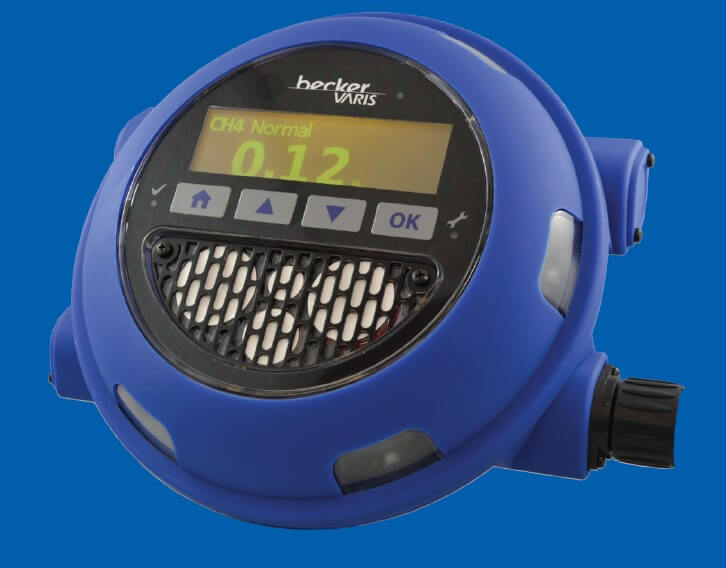
Some monitoring systems can make this easier by storing calibration records and alarm history. Becker Wholesale Mine Supply’s SMARTSENSE® fixed monitor is described as storing those records, and Becker provides technical support for calibration and troubleshooting. The specific capabilities and procedures depend on the monitor and configuration.
GET IN TOUCH
In a hurry? Call us at +1-724-515-4993
Plan Detector Support With Becker Wholesale Mine Supply
A workable calibration program connects equipment requirements, daily checks, scheduled service, and recordkeeping. Becker Wholesale Mine Supply provides mining gas detection equipment and technical support for its monitoring systems. Contact our team to discuss your mine’s gas monitoring application and the support available for your detector setup.
Frequently Asked Questions
Q: How often should a mine gas detector be calibrated?
A: There is no one interval for every mine gas detector. Check the applicable mine regulations and the manufacturer’s instructions for the specific detector and application. Certain methane monitors have 30- or 31-day requirements, while other equipment may follow different procedures.
Q: Is a bump test the same as calibration?
A: No. A bump test checks whether the detector responds to gas and activates its alarms. Calibration checks or adjusts measurement accuracy against a known gas concentration. A successful bump test does not, by itself, confirm an accurate reading.
Q: What should we do if a detector fails a bump test?
A: Follow the detector’s instructions and mine procedure. OSHA-hosted guidance says to perform a full calibration before use after a failed bump test or calibration check. If the instrument fails full calibration, remove it from service and contact the manufacturer for assistance.
Q: How long should calibration records be kept?
A: It depends on the applicable rule. For methane monitors covered by 30 CFR § 75.342, calibration records must be retained for one year. Certain atmospheric monitoring systems covered by 30 CFR § 57.22301 also require test certifications to be retained for at least one year. Check the requirements that apply to your operation.
Products That We Offer
- VHF Leaky Feeder System
- UHF Leaky Feeder System
- SMARTSENSE®FIXED MONITOR
- RNG-500VHF Leaky Feeder Cable
- UHF Low Loss Leaky Feeder Cable
- Kenwood NX-203/303 Radios
Take control of your mining communication systems today! With Becker Wholesale Mine Supply, the leading manufacturer in the USA. Contact us now and revolutionize your mining communication systems!