Fixed Gas Detector Device Systems for Mine Safety

Mining sites must monitor gas levels at all times to prevent explosions, poisoning, and oxygen deficiency incidents. A gas detector device system installed as a fixed monitoring solution gives continuous, automated protection by detecting dangerous gases early and triggering alarms before conditions become deadly. For U.S. mining operations, Becker Wholesale Mine Supply provides industrial-grade fixed gas detection systems built specifically for underground and surface mine environments.
Key Takeaways
- Fixed gas monitoring systems provide 24/7 automated detection of hazardous gases
- A properly installed gas detector device reduces explosion and exposure risk
- Multi-gas sensors help monitor methane, CO, H₂S, and oxygen at the same time
- Becker Wholesale Mine Supply delivers mine-ready detection systems across the USA
- Integrated alarms and data logs support compliance and incident review
Why Gas Detection Is Critical In Mining Operations
Gas hazards are one of the top causes of serious mining incidents. Many dangerous gases are invisible and odorless. Workers often have no warning until symptoms appear — and by then, it may be too late.
Common mine gas threats include:
- Methane — highly explosive in certain concentrations
- Carbon monoxide — toxic even at low levels
- Hydrogen sulfide — poisonous and fast-acting
- Oxygen deficiency — leads to suffocation risk
- Nitrogen dioxide — harmful to lungs and airways
Gas levels can change quickly due to drilling, blasting, ventilation shifts, or equipment operation. That is why permanent detection infrastructure is not optional — it is part of baseline risk control.
What Is A Fixed Gas Detector Device?
A gas detector device is an installed sensor system that continuously measures gas concentrations in a defined area. Unlike handheld monitors, fixed detectors are mounted in strategic locations and operate around the clock without needing worker action.
Typical installation points include:
- Near shafts and return airways
- Equipment rooms
- Conveyor routes
- Fuel storage zones
- Known gas accumulation pockets
A fixed system connects to alarms, control panels, and sometimes ventilation controls. When thresholds are exceeded, alerts trigger immediately.
In simple terms, portable detectors protect the individual worker; fixed detectors protect the entire work zone.
GET IN TOUCH
In a hurry? Call us at +1-724-515-4993
Fixed Vs Portable Detection: Practical Differences
Both portable and fixed monitors matter. But they serve different operational roles.
Portable Units
- Worker-carried
- Spot-check readings
- Battery dependent
- Limited coverage area
Fixed Systems
- Area-based protection
- Always active
- Integrated with alarms
- Networked to control rooms
- Records long-term data
Most U.S. mine safety programs use both, but fixed systems form the backbone.
Becker Wholesale Mine Supply: U.S. Mine Safety Specialists
Becker Wholesale Mine Supply supports mining operations across the United States with engineered safety equipment and monitoring systems. Their focus is practical reliability — equipment that works in dust, vibration, moisture, and temperature swings typical of mine sites.
Their fixed monitoring offerings are selected and configured specifically for mining conditions rather than general industrial use. That distinction matters. Mine airflow patterns, confined geometry, and gas release behavior differ from those of factories or warehouses.
Safety teams working with Becker typically receive:
- Application-specific equipment guidance
- Mine-compatible mounting options
- Sensor configuration support
- Compliance-aware system setup
- Replacement sensor availability
SmartSense Fixed Monitor SSFM-100 Overview
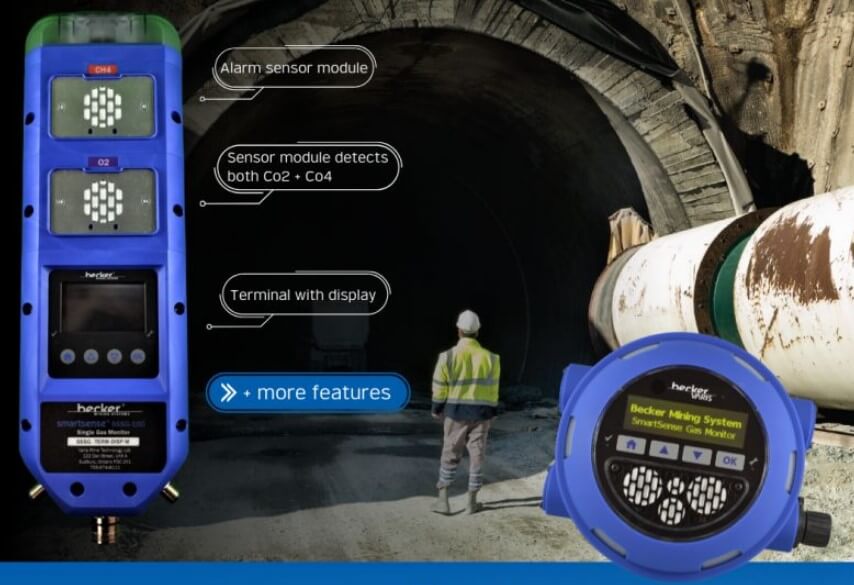
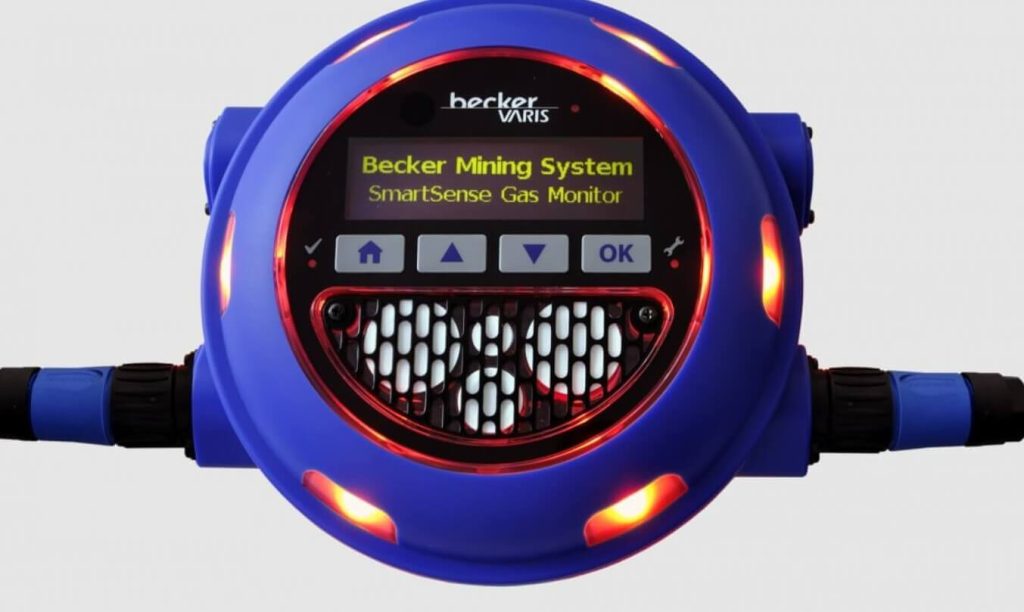
One example system available through Becker Wholesale Mine Supply is the SMARTSENSE® Fixed Monitor SSFM-100. It is designed for multi-gas mine monitoring with a strong emphasis on visibility, accuracy, and durability.
Core System Capabilities
- Multi-gas support — up to four sensors in one unit
- Continuous atmospheric monitoring
- High-visibility alarm signaling
- Event and calibration logging
- Configurable alarm thresholds
- Mine-readable display screen
Instead of installing several single-gas units, operators can monitor multiple hazards with one consolidated monitor.
Sensor Coverage Options
Depending on the configuration, the system can monitor:
- Methane (CH₄)
- Carbon monoxide (CO)
- Hydrogen sulfide (H₂S)
- Oxygen (O₂)
This flexibility helps safety managers match the gas detector device configuration to the mine’s actual hazard profile.
Alarm Visibility And Response Speed
In mining, alarms must work under poor visibility and high noise. A weak alert system is almost as dangerous as no system.
The SmartSense monitor includes:
- 360-degree visual alarm indicators
- Audible alert output
- Multi-level alarm thresholds
- STEL and TWA warning levels
This layered alert structure supports both immediate danger response and exposure management.
Example:
- Level 1 — caution threshold reached
- Level 2 — evacuation required
- Level 3 — critical hazard condition
That structure reduces guesswork during emergencies.
Continuous Monitoring Supports Better Decisions
A modern gas detector device does more than trigger alarms. It creates a usable data trail.
Logged data helps teams:
- Identify recurring gas spikes
- Adjust ventilation routing
- Improve shift scheduling
- Investigate near-miss events
- Support regulatory audits
Trend data often reveals patterns that spot checks miss. Many safety improvements come from reviewing this historical record.
GET IN TOUCH
In a hurry? Call us at +1-724-515-4993
Compliance And Regulatory Support
U.S. mining operations must meet strict atmospheric monitoring requirements. Fixed gas detection systems help satisfy these obligations by providing documented, continuous measurement.
Benefits for compliance programs:
- Automatic record keeping
- Calibration history tracking
- Alarm event logs
- Exposure duration records
- Inspection-ready data
Inspectors prefer systems that produce verifiable logs instead of manual notes.
Integration With Mine Safety Infrastructure
Modern mine safety systems are increasingly interconnected. Fixed detection units can tie into broader safety networks.
Integration options may include:
- Central monitoring dashboards
- Ventilation control triggers
- Strobe alarm networks
- Remote alert systems
- Shutdown interlocks
This connected setup shortens response time and reduces human delay.
Practical Field Insight
Safety engineers often report that fixed monitors catch slow-building hazards that workers ignore. For example, gradual oxygen decline rarely triggers immediate symptoms, but sensors detect it early. In several documented mine incidents, fixed monitors provided the first warning — not worker complaints.
Technology does not replace training, but it adds a reliable second layer of protection.
Fixed Gas Monitoring Is A Core Safety Layer
A properly installed gas detector device system is one of the most effective protections against invisible mine hazards. Fixed monitors provide continuous coverage, faster alerts, and usable data for safety planning. For U.S. mining companies, Becker Wholesale Mine Supply offers field-proven monitoring systems designed for real mine conditions — not generic industrial spaces.
If your site depends only on handheld checks, there is a coverage gap. Fixed monitoring closes that gap and supports both worker safety and regulatory compliance.
Talk with Becker Wholesale Mine Supply about fixed gas monitoring solutions built for your mine environment and hazard profile.
Frequently Asked Questions
What gases should a mine gas detector device monitor?
Most mines monitor methane, carbon monoxide, hydrogen sulfide, and oxygen levels. Exact needs depend on geology and operation type.
Where should fixed gas detectors be installed?
Near air returns, shafts, equipment areas, and known gas accumulation zones.
How often should fixed gas sensors be calibrated?
Typically, every 30–90 days, or per manufacturer and regulatory guidance.
Can fixed detectors replace portable monitors?
No. Fixed systems protect areas. Portable monitors protect individual workers. Both are needed.
Do fixed gas detection systems require network connectivity?
Not always. Many operate standalone, but networked systems provide better centralized oversight.
Products That We Offer
- VHF Leaky Feeder System
- UHF Leaky Feeder System
- SMARTSENSE®FIXED MONITOR
- RNG-500VHF Leaky Feeder Cable
- UHF Low Loss Leaky Feeder Cable
- Kenwood NX-203/303 Radios
Take control of your mining communication systems today! With Becker Wholesale Mine Supply, the leading manufacturer in the USA. Contact us now and revolutionize your mining communication systems!